







What's Happening?
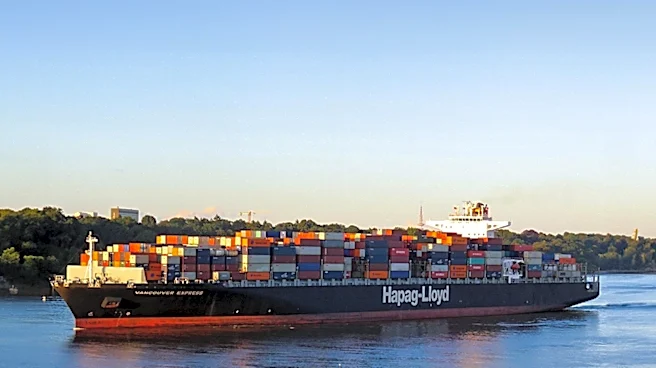
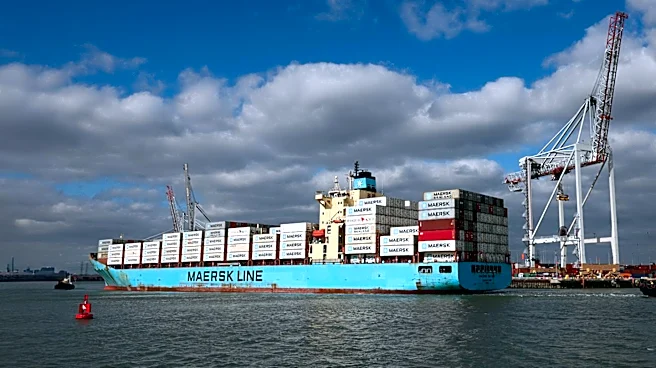
Seaspan, a major vessel owner in the container industry, has partnered with Maersk to launch a comprehensive vessel upgrade program. The initiative involves a commitment of at least $75 million to enhance 18 vessels under long-term charters to Maersk.
The program aims to improve fuel efficiency, cargo capacity, operational flexibility, and reduce emissions. Key upgrades include the installation of a shaft generator to lower auxiliary engine fuel consumption, optimization of main engine performance, and the addition of a high-efficiency propeller. The program also prepares vessels for future emissions regulations by incorporating carbon capture readiness. Additionally, the lashing bridge will be elevated to increase cargo capacity, and deadweight will be enhanced to improve loading capabilities. These measures are expected to reduce slot costs by 10-13% while boosting fuel efficiency and operational performance.
Why It's Important?
This upgrade program is significant as it reflects the maritime industry's broader efforts to enhance vessel efficiency and comply with impending environmental regulations. By improving fuel efficiency and reducing emissions, Maersk and Seaspan are positioning themselves as leaders in sustainable shipping practices. The initiative also addresses rising operational costs by optimizing vessel performance, which is crucial for maintaining competitiveness in the global shipping market. The collaboration with WattSpan and COSCO Shipyard further underscores the industry's commitment to innovation and decarbonization, which could set a precedent for other shipping companies to follow.
What's Next?
The program is part of a larger trend in the maritime industry to retrofit existing vessels ahead of new regulatory requirements. As environmental standards become stricter, more shipping companies may adopt similar upgrade initiatives to remain compliant and competitive. The partnership between Maersk, Seaspan, and WattSpan suggests potential future collaborations in maritime technology and decarbonization solutions. These efforts could lead to further advancements in vessel efficiency and sustainability, influencing industry standards and practices.