




What's Happening?
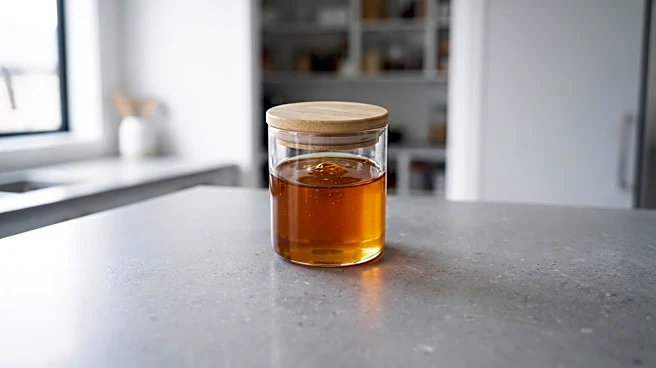
Researchers at Aston University in Birmingham, UK, have developed a bee-free alternative to Mānuka honey that replicates its potent antibacterial properties. This innovation addresses ethical concerns regarding bee exploitation in honey production and
the threats faced by bee populations due to pollution, pesticides, and disease. The scientists found that by adding compounds like methylglyoxal (MGO) and hydrogen peroxide, they could create a vegan alternative effective against bacteria such as Mycobacterium abscessus, which can cause severe lung infections. MGO is a key compound responsible for Mānuka honey's highly sought-after antibacterial qualities.
Why It's Important?
This development is significant for several reasons. Firstly, it offers a sustainable and ethical alternative to traditional Mānuka honey, aligning with the growing vegan movement and concerns about animal welfare. Secondly, it provides a potential solution to the declining bee populations, which are crucial for global ecosystems and agriculture. Thirdly, the creation of a bioengineered alternative with proven antibacterial efficacy could have substantial implications for medicine and wound care. It opens avenues for developing new antimicrobial therapies that are not reliant on animal-derived ingredients, potentially offering a consistent and controlled source of antibacterial agents, especially important given the rise of antibiotic-resistant bacteria.
What's Next?
Dr. Jonathan Cox and his team plan to continue developing new formulas to further understand the antimicrobial components of Mānuka honey and how to best incorporate them into vegan alternatives. The long-term goal is to support the development of sustainable honey-inspired antimicrobial products for various applications, including wound care and other topical treatments. This research could also provide deeper insights into how natural honey functions, guiding the design of next-generation antimicrobial therapies. The success of this bee-free alternative could pave the way for similar innovations in other animal-derived products, further expanding the plant-based market and reducing reliance on animal agriculture.
Beyond the Headlines
This scientific breakthrough extends beyond simply creating a vegan product; it represents a broader trend in biotechnology and sustainable innovation. By reverse-engineering natural products, scientists are finding ways to harness beneficial properties without the ethical or environmental drawbacks of traditional methods. This approach could lead to a future where many animal-derived products are replaced by lab-grown or plant-based alternatives, impacting industries from food to pharmaceuticals. It also highlights the potential of interdisciplinary research, combining biology, chemistry, and engineering, to address complex global challenges like environmental sustainability and public health. The cultural significance of Mānuka, traditionally revered by the Māori people, is also being reinterpreted through a modern scientific lens, demonstrating how ancient wisdom can inspire contemporary solutions.