





What's Happening?
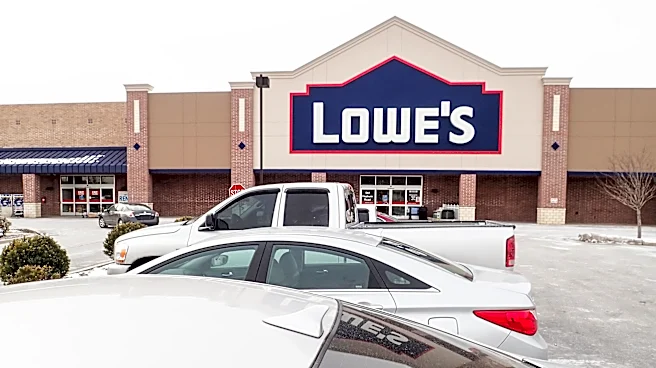
Lowe's has opened a new store in Willis, Texas, marking its fifth new location in the state for 2026 and its tenth since 2025. This expansion brings Lowe's total store count in Texas to 154, making it the state with the most Lowe's outlets. The new 95,000-square-foot
store in Willis, located approximately 50 miles north of Houston, has created over 100 jobs. According to Joel Cogdell, Lowe's division president for the South division, the company is heavily investing in Texas due to its high growth rate and the opportunity to expand its customer base. The decision to open stores in areas like Willis, which has seen significant demographic shifts and nearly 20% growth since 2020, aligns with Lowe's strategy to serve customers in growing communities. The opening follows Lowe's third-quarter earnings report, which showed a 9.3% increase in total sales to $22.8 billion. While inflation and high gas prices have impacted do-it-yourself (DIY) consumers, Lowe's is experiencing continued success and increased foot traffic from professional customers.
Why It's Important?
Lowe's strategic expansion in Texas highlights a significant shift in consumer behavior within the home improvement sector, with a growing emphasis on professional contractors over DIY customers. This focus is critical as inflation and elevated gas prices continue to influence household spending on home improvement projects. By targeting high-growth areas like Montgomery County, Texas, Lowe's aims to capture a larger share of the professional market, which remains active despite economic pressures. The company's investment in tech-enabled tools, such as AI-powered Material Lists and Blueprint Takeoffs, within its new stores demonstrates an effort to enhance efficiency and service for these professional clients. This approach could set a new standard for how home improvement retailers cater to their diverse customer base, potentially influencing competitors to adopt similar strategies to maintain market relevance and growth in a fluctuating economic landscape. The creation of over 100 jobs per new store also contributes positively to local economies in these rapidly expanding regions.
What's Next?
Lowe's is expected to continue its focus on expanding in high-growth markets, particularly those experiencing significant population increases, as demonstrated by its strategy in Texas. The company will likely further integrate technology, such as AI-powered tools, into its new and existing stores to better serve professional customers and streamline operations. This technological adoption aims to enhance the shopping experience for contractors, potentially leading to increased loyalty and market share in the pro segment. Additionally, Lowe's may continue to monitor economic indicators like inflation and gas prices to adapt its strategies for DIY consumers, who have been more affected by these factors. The success of these new Texas stores, particularly in attracting and retaining professional clients, will likely inform future expansion and operational decisions across the company, potentially leading to similar investment in other rapidly developing regions across the U.S.
Beyond the Headlines
Lowe's concentrated expansion in Texas, coupled with its emphasis on professional customers, signals a broader trend in the retail sector where companies are adapting to demographic shifts and economic pressures. The focus on 'pro' customers reflects a recognition that while individual consumer spending can be volatile, the demand for skilled trades and related supplies remains robust. This strategy also highlights the increasing role of technology, such as AI, in traditional retail environments, transforming how businesses interact with and serve their clientele. The investment in areas experiencing rapid population growth also underscores the ongoing urbanization and suburbanization trends in the U.S., where retailers follow population movements to establish new market footholds. This could lead to a more specialized retail landscape, where stores are increasingly tailored to the specific needs and purchasing power of local demographics, moving away from a one-size-fits-all approach.