



What's Happening?
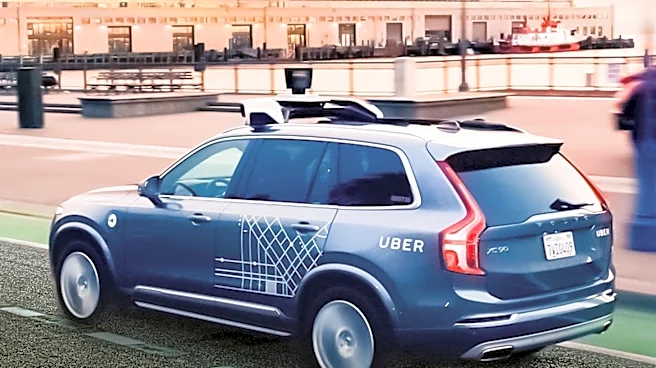
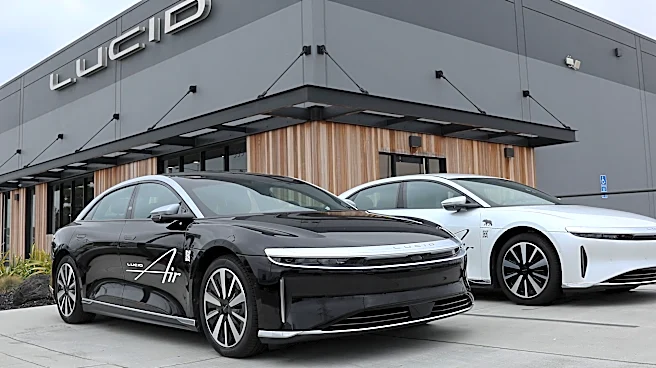
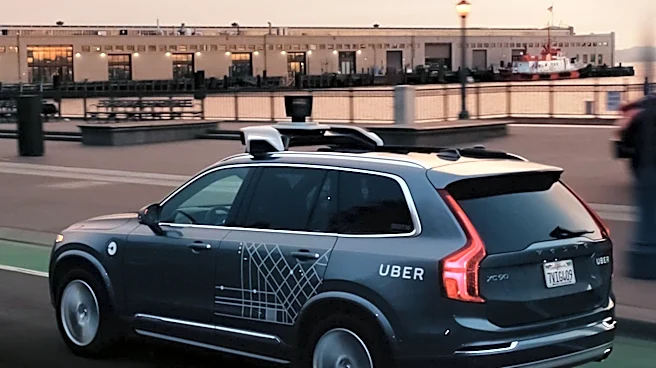
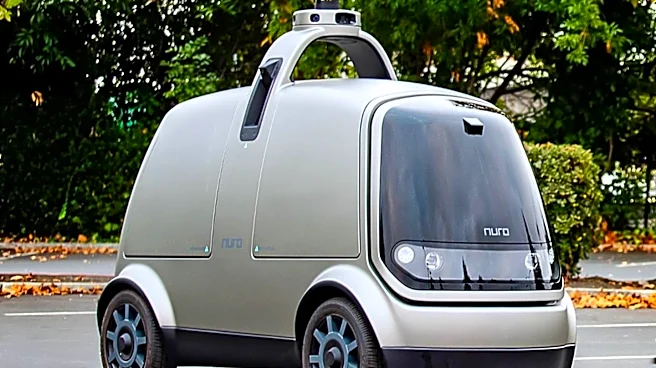
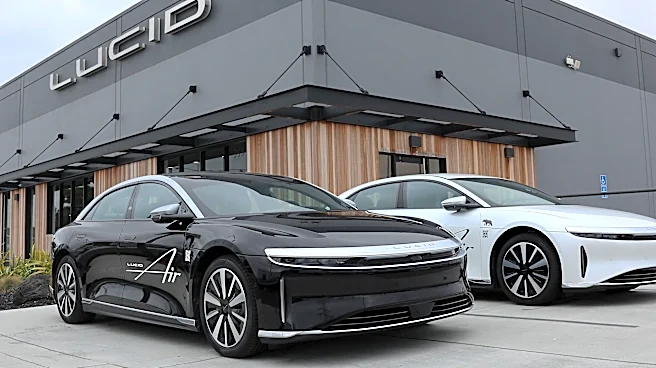
Lucid Group (NasdaqGS:LCID) has commenced fully driverless testing of its Lucid Gravity robotaxi on public roads within the San Francisco Bay Area. This pilot program is a collaborative effort with Uber and Nuro, focusing on commercial ride-hailing and goods
delivery applications. The company's management has confirmed fleet commitments from these partners, indicating a clear deployment strategy beyond the initial trial phase. This move integrates Lucid's core hardware and software stack, built on its Lucid Gravity platform, directly into commercial ride-hailing and delivery services. The initiative represents a significant step in Lucid's autonomy roadmap, which analysts consider a crucial factor given the company's current unit economics and cash burn. Uber has committed to purchasing at least 35,000 Lucid vehicles, equipped with the Nuro Driver, for a global robotaxi rollout scheduled to begin in early 2027, targeting both passenger rides and goods delivery.
Why It's Important?
This development is critical for Lucid Group as it establishes a concrete pathway into the autonomous ride-hailing market, a sector with substantial growth potential. The partnership with Uber, a major player in ride-hailing, and Nuro, a leader in autonomous delivery, provides Lucid with a significant commercial opportunity and validates its autonomous technology. For the broader U.S. transportation industry, this signifies a step forward in the adoption of driverless technology for both passenger and logistics services, potentially transforming urban mobility and delivery paradigms. While the stock has experienced significant declines, this driverless testing milestone could be a catalyst for investor sentiment, shifting the narrative from concerns about cash burn and weak unit economics to the potential for higher-margin volume and software revenue. The success of this program could position Lucid as a key technology provider in the evolving autonomous vehicle landscape, impacting competitors and accelerating the development of similar services.
What's Next?
The next significant milestone for Lucid Group's robotaxi program is the planned public launch of Uber's Lucid-powered robotaxi service in the San Francisco Bay Area, scheduled for the first quarter of 2027. Investors will closely monitor progress towards this launch, as well as updates on how many of the more than 100 test vehicles transition into commercial fleets. The success of this initial commercial deployment will be a critical indicator for the broader global rollout planned with Uber. Further developments regarding the integration of the Nuro Driver and the performance of the Lucid Gravity in real-world commercial operations will also be key. The company's ability to convert these large fleet commitments into sustainable revenue and improve its unit economics will be under scrutiny, especially given its current financial performance and investor concerns about cash burn.
Beyond the Headlines
The initiation of fully driverless robotaxi testing by Lucid Group, in collaboration with Uber and Nuro, has broader implications beyond immediate commercial success. It highlights the increasing convergence of electric vehicle technology with autonomous driving capabilities, pushing the boundaries of what's possible in transportation. This move could accelerate regulatory discussions and public acceptance of driverless vehicles in urban environments, potentially leading to new policy frameworks for autonomous ride-hailing and delivery services. Ethically, the deployment of fully driverless vehicles raises questions about safety, liability, and the impact on human employment in the transportation sector. Culturally, the widespread adoption of robotaxis could fundamentally alter how people commute, access goods, and interact with urban spaces, potentially reducing traffic congestion and parking demand while creating new service models.