










What's Happening?
Ubud, located in central Bali, is recognized as a prime destination for cultural and spiritual exploration. The region is characterized by its unique landscape, shaped by the Subak irrigation cooperative, which includes terraced rice paddies like those
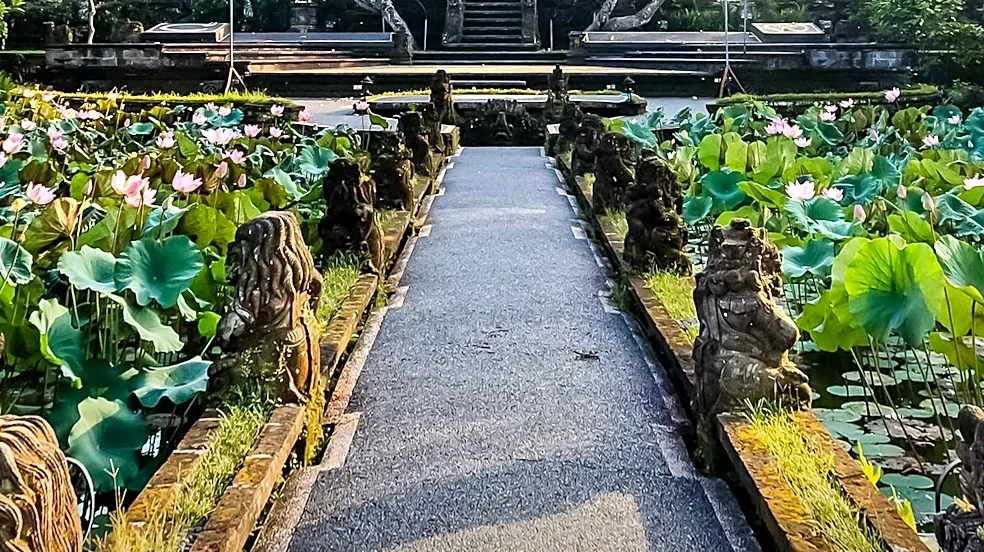
in Tegallalang, situated 20 minutes north of Ubud. The spiritual heart of the area is Tirta Empul, a 10th-century holy spring temple 20 minutes east of Ubud, where Balinese Hindus perform purification rituals. Additionally, the Sacred Monkey Forest at Ubud's southern edge is a 12-hectare sanctuary housing 700 long-tailed macaques and three 14th-century Hindu temples. These sites collectively form the cultural core of Bali, offering visitors a deep dive into Balinese Hindu life, which is evident through daily practices such as placing palm-leaf offering baskets and ceremonial processions. The town's guide community is noted for its extensive knowledge, enhancing the visitor experience by explaining the spiritual and agricultural significance embedded in the local culture.
Why It's Important?
Ubud's prominence as a cultural and spiritual hub is crucial for understanding Bali's identity and its role in Indonesian tourism. Despite being a small fraction of the nation, Bali attracts the largest share of international visitors, largely shaping the global perception of the archipelago and serving as a significant engine for Indonesian tourism. The preservation and accessibility of sites like the terraced rice paddies, ancient temples, and the Sacred Monkey Forest highlight a living culture that has endured through centuries of history, including Javanese Majapahit influence, colonial conquest, and modern challenges like the 2002 Kuta bombings. This continuous ceremonial life, rather than being a mere performance for tourists, represents the operating system of Balinese Hindu life. The availability of knowledgeable local guides further enriches the experience, allowing visitors to connect with the profound historical and spiritual significance of everyday practices and landscapes, thereby fostering a deeper appreciation for Balinese heritage and its resilience.
What's Next?
For visitors to Ubud, the immediate next steps involve engaging with the rich cultural offerings. This includes exploring the terraced rice paddies of Tegallalang, participating in or observing purification rituals at Tirta Empul, and visiting the Sacred Monkey Forest to witness the coexistence of nature, wildlife, and ancient temples. Engaging with local guides is highly recommended to gain deeper insights into the spiritual and agricultural significance of these sites and daily Balinese Hindu practices. Beyond these immediate activities, visitors can also experience traditional Balinese dance performances held nightly throughout Ubud. For those seeking broader exploration, Ubud serves as an optimal base for accessing other parts of Bali, with South Bali offering beaches and nightlife, and Sanur providing a quieter alternative with ferry connections to Nusa Penida. Continued efforts to preserve these cultural and natural sites will ensure that Ubud remains a vital center for cultural tourism and spiritual enrichment.
Beyond the Headlines
The cultural landscape of Ubud, particularly the Subak irrigation system, represents more than just agricultural ingenuity; it embodies a profound connection between the Balinese people, their environment, and their spiritual beliefs. This system, with its network of water temples and hand-dug channels, reflects a sophisticated and sustainable approach to resource management that has been in place for centuries, demonstrating a harmonious relationship with nature guided by spiritual principles. The daily practice of placing offerings and the continuous ceremonial life underscore a culture where spirituality is deeply integrated into every aspect of existence, rather than being confined to specific religious institutions. This living culture, resilient through historical upheavals, offers a powerful counter-narrative to the often-commercialized aspects of modern tourism. It highlights the ethical dimension of respecting and understanding indigenous practices and the long-term shift towards valuing authentic cultural experiences over superficial attractions, fostering a deeper appreciation for the interconnectedness of culture, spirituality, and environmental stewardship.