
What's Happening?
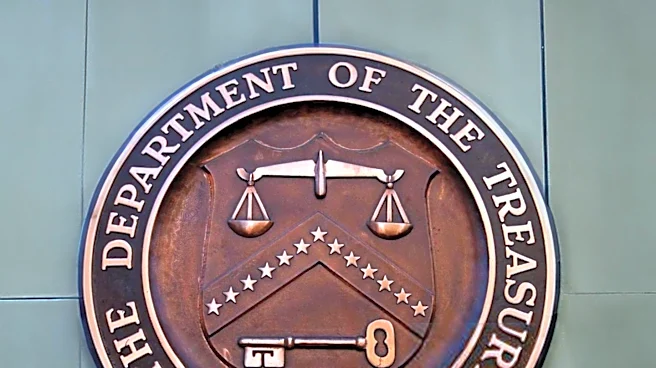
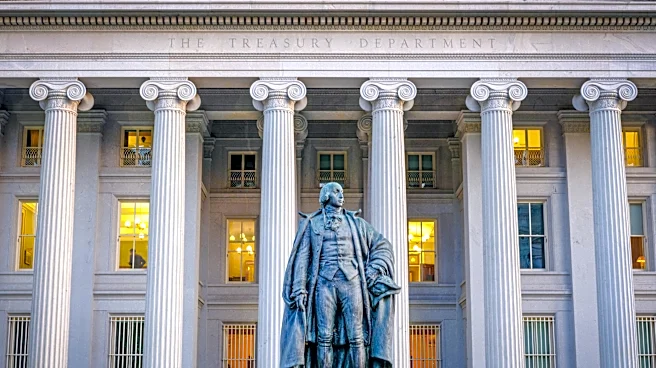
The U.S. Treasury Department has taken significant action against cryptocurrency exchange MEXC Global and eight Canadian money services businesses. On November 6, 2026, the Financial Crimes Enforcement
Network (FinCEN) issued an order prohibiting U.S. financial institutions from processing fund transfers involving MEXC Global, alleging the exchange facilitated at least $16 billion in illicit transactions over five years. These transactions are linked to sanctions evasion involving Iran, North Korea, and Russia, as well as cybercrime activities. Concurrently, the Treasury's Office of Foreign Assets Control (OFAC) designated eight Canadian money services businesses for allegedly facilitating transactions involving Iranian entities and sanctioned cryptocurrency exchanges. These Canadian firms are accused of converting Iranian rials into cryptocurrencies, allowing funds to move internationally through digital asset accounts linked to sanctioned Iranian exchanges and the Islamic Revolutionary Guard Corps (IRGC). The measures are part of Operation Economic Outcast, an ongoing campaign against Iran's cryptocurrency activities.
Why It's Important?
These actions by the U.S. Treasury underscore a heightened focus on combating the use of cryptocurrency for illicit financial activities and sanctions evasion. For U.S. financial institutions, the FinCEN order means a mandatory restriction on transfers involving MEXC Global, increasing compliance burdens and risks associated with crypto transactions. The sanctions against Canadian firms highlight the U.S.'s commitment to disrupting global networks that enable sanctioned entities, particularly Iran, to access the international financial system. This could lead to increased scrutiny of money services businesses and cryptocurrency platforms worldwide, prompting them to strengthen their anti-money laundering (AML) and sanctions compliance programs. The involvement of drug proceeds in the Canadian firms' activities also points to a broader effort to combat organized crime leveraging digital assets. These measures aim to cut off funding sources for hostile state actors and criminal organizations, impacting the operational capabilities of entities involved in such illicit activities.
What's Next?
The FinCEN order against MEXC Global will take effect 30 days after its publication in the Federal Register, at which point U.S. financial institutions must comply with the transfer restrictions. MEXC Global has stated it is reviewing the order and cooperating with regulators, while other exchanges like OKX have already warned users against direct transfers from MEXC due to compliance concerns. The Canadian financial intelligence agency, FINTRAC, has confirmed its coordination with FinCEN and OFAC, indicating ongoing international cooperation in combating financial crime. FINTRAC has also reported a significant increase in money services business registration revocations and administrative penalties, suggesting a tightening regulatory environment in Canada. These actions are likely to prompt other cryptocurrency exchanges and money services businesses globally to re-evaluate and enhance their compliance frameworks to avoid similar enforcement actions from U.S. authorities.
Beyond the Headlines
These enforcement actions reveal a critical juncture in the intersection of national security, financial regulation, and emerging technologies. The U.S. government's aggressive stance against crypto-enabled sanctions evasion signals a long-term commitment to extending its regulatory reach into the digital asset space. This could accelerate the development and adoption of advanced blockchain analytics tools by regulatory bodies and financial institutions to identify and track illicit transactions. Furthermore, the targeting of Canadian firms highlights the extraterritorial nature of U.S. sanctions and the expectation that allied nations will cooperate in enforcing these measures. This could lead to increased pressure on countries to harmonize their financial regulations with U.S. standards, particularly concerning cryptocurrency. The broader implication is a continued evolution of financial warfare, where digital assets become both a tool for evasion and a new frontier for enforcement, reshaping global financial compliance and national security strategies.