







What's Happening?
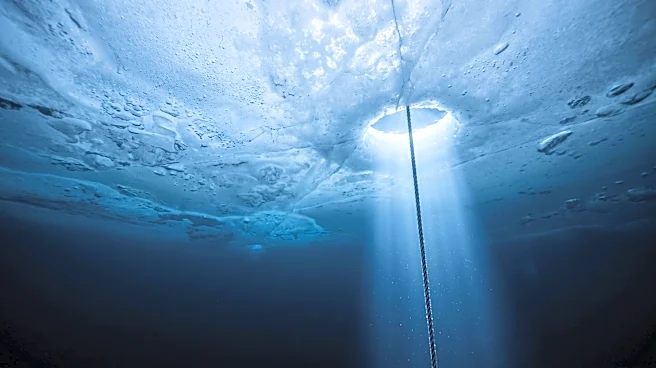
Freediving under ice provides a unique and quiet experience, described as a blend of adventure, challenge, and meditation. Beneath a frozen lake, divers encounter a muffled world where the ice crackles, pops, shifts, and flexes. The experience is characterized
by muted light and a sense of insulation from the world above. Sabrina Figliomeni, an experienced ice freediver, highlights the cold as a primary physical challenge, even with wetsuits, leading to numb lips and extremities. Despite the cold, she emphasizes the potential for creating a desired vibe, from calm meditation to playful exploration, such as skating between holes or sitting upside down. Safety protocols are rigorous, involving pre-planning, careful hole cutting, the use of down-lines and lanyards, and the presence of safety divers and warming tents.
Why It's Important?
Ice freediving, as detailed by Sabrina Figliomeni, is important for several reasons beyond its recreational appeal. It serves as a powerful tool for building resilience and fostering mental well-being, offering a challenging yet meditative escape from daily distractions. The activity promotes community and connection, as participants often engage in group dives, share safety responsibilities, and partake in post-dive rituals like communal cooking. Furthermore, Figliomeni uses her platform to raise awareness for mental health, donating a portion of her course fees to initiatives and sharing her personal story of loss to encourage others to seek help. This demonstrates how extreme sports can be leveraged for social good, transforming personal challenges into opportunities for advocacy and support.
What's Next?
The practice of ice freediving is likely to continue growing as more individuals seek unique challenges and alternative forms of mental and physical engagement. As awareness of its benefits for resilience and mental health spreads, more organized events and training opportunities may emerge. Safety will remain a paramount concern, with ongoing development and refinement of protocols and equipment. The community aspect, including shared experiences and post-dive rituals, will continue to be a key draw, fostering strong bonds among participants. Additionally, the integration of such activities with broader mental health advocacy efforts could expand, inspiring more people to engage in challenging outdoor pursuits for personal growth and to support important causes.
Beyond the Headlines
Ice freediving delves into profound psychological and philosophical dimensions. The act of voluntarily entering an extreme, overhead environment like under ice forces participants to confront their fears, trust their equipment, and develop an acute awareness of their physical and mental states. This intense self-reliance and the meditative quiet found beneath the ice can lead to significant personal insights and a deeper connection with nature. The activity also highlights the human capacity for adaptation and resilience in the face of discomfort, challenging conventional notions of comfort zones. Furthermore, the communal aspect of ice freediving, where individuals support each other in a high-risk environment, underscores the importance of trust and shared experience in building strong social bonds and fostering a sense of belonging.