







What's Happening?
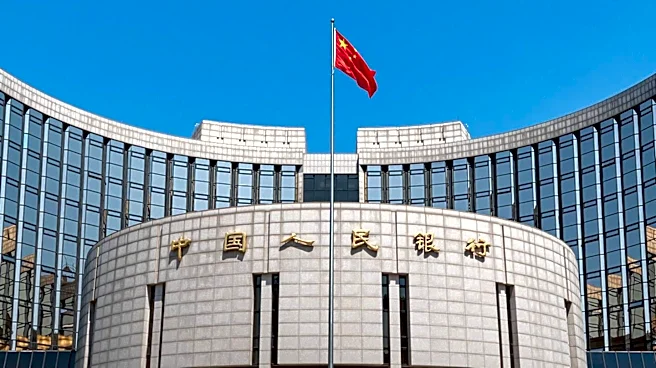
China has issued an order preventing organizations and individuals from complying with an European Union (EU) probe into e-commerce giant JD.com's acquisition of a German electronics retailer. This move escalates tensions between Brussels and Beijing.
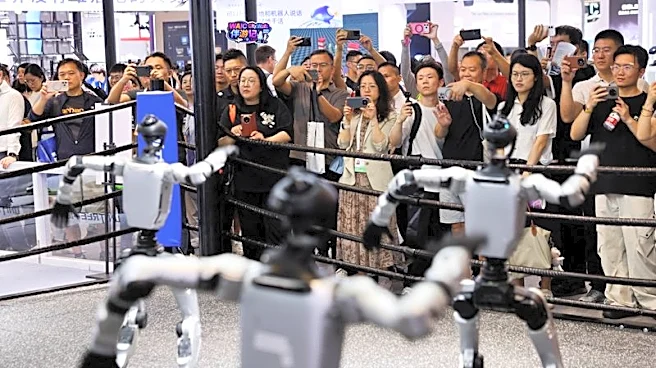
The EU's investigation is the first under its new rules designed to scrutinize firms that receive foreign subsidies. Beijing has criticized the EU regulators' request for documents, stating it 'seriously undermined the international rule of law' and has threatened retaliatory measures. This clash highlights the ongoing difficulties Europe faces in protecting its businesses from China's industrial policies, which the EU claims have led to job losses in Europe. Concurrently, one of Germany's largest industrial associations has urged the EU to prioritize developing domestic robotics supply chains, following a surge in shares of Chinese robot maker Unitree after its trading debut.
Why It's Important?
This incident is significant as it marks a direct confrontation between China and the EU over economic sovereignty and regulatory authority. The EU's anti-subsidies probe is a new tool aimed at leveling the playing field for European companies against foreign firms that benefit from state support, which Brussels views as distorting competition. China's refusal to cooperate and its threat of retaliation signal a strong defense of its state-backed economic model and a challenge to the EU's regulatory reach. For U.S. businesses and policymakers, this situation underscores the complexities of global trade and investment, particularly when dealing with state-controlled economies. It highlights the potential for regulatory clashes and the need for clear international frameworks to address issues of fair competition and state subsidies. The outcome of this dispute could set a precedent for how the EU and other major economies interact with Chinese companies and their acquisitions in the future, impacting global merger and acquisition activities and trade relations.
What's Next?
The EU is likely to face a challenge in enforcing its new anti-subsidies rules without China's cooperation. This could lead to a diplomatic standoff, with the EU potentially considering further actions or retaliatory measures against Chinese companies or investments in Europe. Conversely, China may follow through on its threats of retaliation, further escalating trade tensions. The call from German industrial associations to prioritize domestic robotics supply chains suggests a broader European strategy to reduce reliance on Chinese technology and strengthen local industries, which could lead to increased investment in European manufacturing and technology sectors. This situation could also prompt other countries to develop similar regulatory tools to address foreign subsidies, potentially leading to a more fragmented global trade environment. The long-term implications include a potential re-evaluation of trade agreements and investment policies between the EU and China.
Beyond the Headlines
This dispute delves into the deeper philosophical and economic differences between market-based economies and state-controlled systems. The EU's anti-subsidies probe is an attempt to address what it perceives as unfair advantages derived from state intervention, a core tenet of China's economic model. China's resistance, framed as upholding 'international rule of law,' reflects its view that its economic practices are legitimate and not subject to external regulatory oversight. This clash highlights the ongoing struggle to define the rules of global commerce in an era of increasing economic nationalism and geopolitical competition. It also raises questions about the effectiveness of international trade norms when confronted with differing economic philosophies. The outcome could influence the future of global supply chains, encouraging a shift towards regionalization and diversification away from single-country dependencies, particularly in strategic sectors like technology and manufacturing.