







What's Happening?
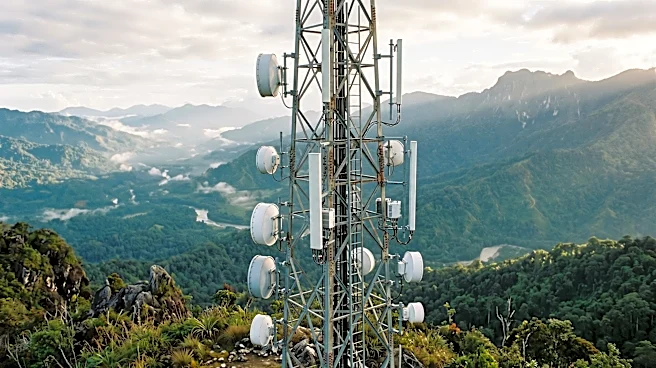
State-owned Telikom PNG has signed a tower sharing license agreement with Digicel PNG, marking the third such deal in Papua New Guinea's telecommunications sector within the last two months. This agreement follows a similar deal Telikom signed with Vodafone
PNG in August, and a separate agreement between Digicel PNG and Vodafone PNG in September. The objective of these collaborations is to accelerate and enhance network expansion, improve coverage and connectivity, reduce infrastructure deployment costs, and extend connectivity to rural and underserved communities. Telikom Limited CEO Amos Tepi emphasized the importance of industry collaboration in advancing PNG's digital transformation and bridging the digital divide. These infrastructure sharing initiatives are expected to expedite the rollout of 5G services across the country, as both Digicel and Vodafone have been preparing for 5G deployment for several years.
Why It's Important?
This series of tower sharing agreements is a significant development for Papua New Guinea's telecommunications landscape. By sharing infrastructure, telcos can avoid redundant investments in building new towers, leading to substantial cost savings. These savings can then be reinvested into network upgrades and expansion, particularly in remote areas that are often uneconomical to serve individually. Improved coverage and connectivity will directly benefit consumers and businesses, fostering economic growth and digital inclusion. The expedited rollout of 5G services, facilitated by these agreements, will bring advanced mobile broadband capabilities to the nation, supporting various applications from enhanced mobile internet to IoT services. This collaborative approach sets a precedent for how developing nations can overcome infrastructure challenges to accelerate digital transformation.
What's Next?
With these tower sharing agreements in place, Telikom, Digicel, and Vodafone are expected to proceed with more rapid and efficient deployment of their network infrastructure, particularly for 5G services. Papua New Guinea's National Information and Communications Technology Authority (NICTA) finalized its framework for issuing 5G spectrum licenses in the 2.6 GHz and 3.5 GHz bands in September. The next crucial step will be the awarding of these licenses by NICTA, which will enable the telcos to fully launch their 5G offerings. The success of these initial collaborations may also encourage further infrastructure sharing initiatives or partnerships within the PNG telecom sector, potentially leading to a more robust and competitive market.
Beyond the Headlines
The trend of infrastructure sharing in Papua New Guinea reflects a global movement in the telecommunications industry, especially in emerging markets, to optimize capital expenditure and accelerate network deployment. This approach not only benefits the operators by reducing costs but also has broader societal impacts by improving access to digital services for a larger population. For a country like Papua New Guinea, with its challenging geography and dispersed population, such collaborations are vital for bridging the digital divide and ensuring equitable access to modern communication technologies. This model could serve as a blueprint for other nations facing similar infrastructure development hurdles, demonstrating how strategic partnerships can drive national digital agendas more effectively than individual competitive efforts.