








What's Happening?
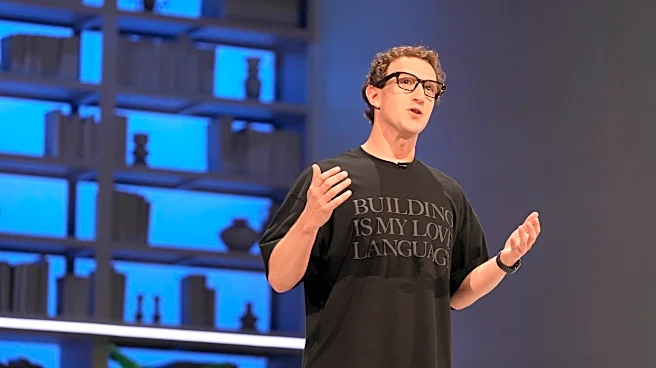
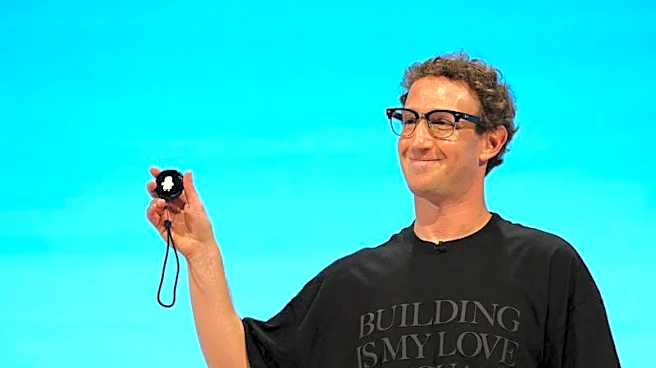
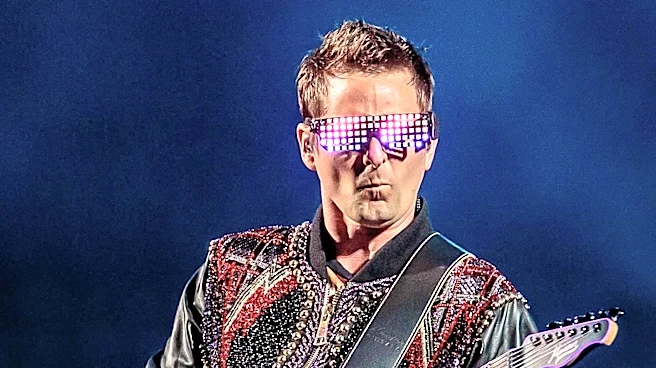
Muse frontman Matt Bellamy has clarified the situation surrounding the band's social media handle change from '@muse' to '@museband' on Instagram and '@Musetheband' on X. The change occurred after Meta, led by CEO Mark Zuckerberg, decided to use the name
'Muse' for its new artificial intelligence agent. Bellamy stated that he met with Zuckerberg to discuss the matter, reaching an agreement that allowed Meta to proceed with its AI product while protecting the band's intellectual property related to music and merchandise. Bellamy received a beta version of Meta's AI tool prior to its public release. The British rock band, formed in 1994, is known for albums such as 'Showbiz' and 'Black Holes and Revelations,' and recently performed at the iHeartRadio Music Festival in Las Vegas and the Shoreline Amphitheatre in Mountain View as part of their 'Wow! Signal' tour.
Why It's Important?
This development highlights the increasing intersection of technology and entertainment, particularly concerning intellectual property rights in the digital age. As AI technologies become more prevalent, the naming conventions and brand identities of established entities, like musical artists, can clash with those of emerging tech products. The agreement between Muse and Meta sets a precedent for how such conflicts might be resolved, emphasizing negotiation and mutual understanding rather than legal battles. For artists, it underscores the importance of protecting their brand beyond traditional mediums, extending to digital spaces and emerging technologies. For tech companies, it illustrates the need for careful consideration of existing trademarks and brand recognition when naming new products, especially those with broad public reach. The resolution ensures that both parties can continue their respective endeavors without significant disruption, while also raising awareness about the complexities of digital branding.
What's Next?
The agreement between Muse and Meta suggests a potential model for future interactions between established brands and rapidly evolving technology companies. Other artists and public figures may look to this case as a reference point if their brand names are considered for use by AI or other tech products. Meta will continue to develop and deploy its Muse AI agent, which is designed as a personal assistant capable of handling tasks such as email, scheduling, shopping, and travel. The band Muse will continue its 'Wow! Signal' tour, supporting its latest album, and will maintain its updated social media handles. The situation may prompt further discussions within the entertainment and tech industries regarding best practices for brand protection and naming conventions in an increasingly digital and AI-driven landscape.
Beyond the Headlines
The incident between Muse and Meta delves into the broader implications of brand identity in an era dominated by artificial intelligence and digital platforms. It raises questions about the ownership of common words or names when they become associated with distinct entities across different industries. The resolution, achieved through direct communication and negotiation, suggests a pragmatic approach to intellectual property disputes in a rapidly changing technological environment. This case could influence how future intellectual property laws and guidelines are shaped to accommodate the unique challenges posed by AI and digital branding. Furthermore, it highlights the growing power and influence of tech giants like Meta, whose product naming decisions can directly impact established cultural entities. The ability of a band to negotiate with a tech titan over a name underscores the value of brand recognition and the need for clear boundaries in the digital commons.