






What's Happening?
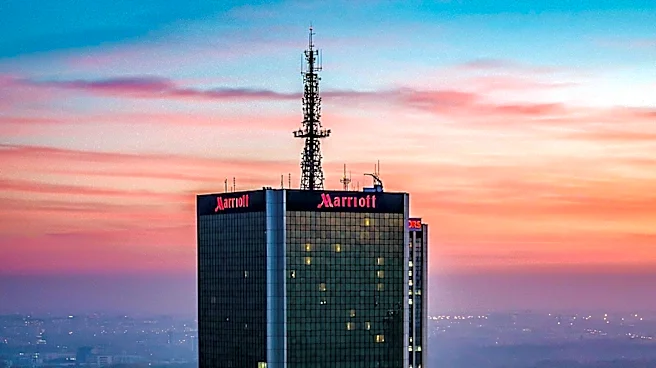
Marriott International, a prominent hotel operator, has increased its full-year room revenue growth forecast, citing robust travel demand across its properties. The company now anticipates revenue per available room (RevPAR) to grow between 4.5% and 5% in 2026,
an increase from its previous projection of 3% to 3.5%. This optimistic outlook is driven by continued spending from wealthier consumers on luxury experiences, sustained business travel, and improved demand for mid-scale and budget hotels. Despite ongoing inflation and geopolitical uncertainties, leisure travel has remained resilient. For the quarter ending September 30, Marriott reported an adjusted profit per share of $3.02, surpassing analyst expectations of $2.84. Total revenue for the third quarter reached approximately $7 billion, exceeding Wall Street's forecast of $6.92 billion. While the Middle East and Africa region saw a 5.3% decrease in room revenue due to ongoing conflicts, the U.S. and Canada experienced a 7.4% rise, with Marriott's upscale segment in these regions reporting an 11.9% increase in RevPAR.
Why It's Important?
Marriott's revised forecast signals a strong recovery and sustained growth in the U.S. hospitality sector, indicating that consumer spending on travel and experiences remains robust despite economic pressures. This positive trend suggests resilience in the broader U.S. economy, particularly within the leisure and business travel segments. The increased RevPAR projections directly impact Marriott's profitability and shareholder value, as evidenced by the 3.4% rise in its shares during premarket trading. For the U.S. market, the strong performance in both luxury and mid-scale hotel segments points to a broad-based recovery, benefiting various economic stakeholders from hotel owners and operators to local businesses reliant on tourism. The continued strength in business travel also indicates a healthy corporate environment, with companies investing in face-to-face interactions. This positive outlook from a major industry player like Marriott can influence investment decisions and employment trends within the travel and tourism industry, potentially leading to further expansion and job creation.
What's Next?
Following Marriott's optimistic forecast, other hotel chains and travel-related businesses may re-evaluate their own projections, potentially leading to a broader upward revision of growth expectations across the U.S. hospitality sector. The company will likely continue to monitor geopolitical developments, particularly in the Middle East, as these conflicts have shown to impact regional revenues. Marriott's focus will remain on leveraging strong demand in North America and other stable markets to drive further growth. Investors will be watching for continued strong earnings reports and any further adjustments to forecasts. The sustained demand for luxury and business travel could also prompt Marriott to accelerate expansion plans or invest in new properties and services to capitalize on market opportunities. Additionally, the company may explore strategies to mitigate the impact of international conflicts on its global operations, potentially by diversifying its market focus or enhancing offerings in more stable regions.
Beyond the Headlines
The sustained demand for travel, particularly in the luxury segment, highlights a broader societal trend where experiential spending is prioritized, even amidst economic uncertainties. This suggests a shift in consumer behavior where discretionary income is increasingly allocated towards travel and leisure, potentially at the expense of other consumer goods. The resilience of business travel also underscores the enduring importance of in-person interactions in the corporate world, challenging earlier predictions of a permanent shift to virtual-only engagements. This has implications for urban economies that rely heavily on business tourism, such as convention centers, restaurants, and local transportation. Furthermore, the ability of major hotel chains like Marriott to navigate geopolitical challenges while maintaining strong performance in key markets demonstrates the adaptability and strategic prowess required in a globalized industry. This trend could also lead to increased competition for talent within the hospitality sector as demand for services grows, potentially driving up wages and improving working conditions for employees.