






What's Happening?
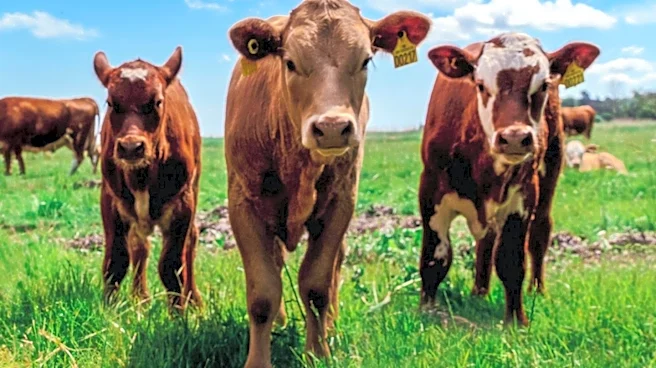
Tyson Foods, a major U.S. meat producer, incurred a $654 million loss in its beef division during 2026. This significant financial setback is attributed to a historic cattle shortage, which saw the U.S. cattle herd reach its smallest size in 75 years
at the beginning of 2026. The primary cause of this shortage has been widespread drought, compounded by factors such as fewer farmers and ranchers, increased operational costs, international competition, and industry consolidation. Tyson Foods reported that its cattle costs surged by $2.1 billion in 2026, as the price increases for cattle outpaced those for beef. The company, which produces approximately one in five pounds of chicken, beef, and pork in the U.S., even closed some of its beef facilities during the year, citing USDA data indicating persistent supply constraints. Despite these challenges, demand for beef remains strong, with prices near all-time highs.
Why It's Important?
This situation highlights significant vulnerabilities within the U.S. meat supply chain and its direct impact on consumers and the broader economy. Tyson Foods' substantial loss in its beef sector underscores the financial strain faced by large-scale meat processors due to supply-side pressures. The historic cattle shortage, driven by environmental factors like drought and economic shifts, means that consumers are likely to continue facing elevated beef prices for an extended period. This affects household grocery budgets across the nation, potentially leading to changes in dietary habits as consumers seek more affordable protein alternatives. For the agricultural sector, the ongoing challenges in herd rebuilding signal a need for long-term strategies to address climate impacts and economic pressures on ranchers. The consolidation within the industry also raises questions about market resilience and competition during periods of scarcity.
What's Next?
The American Farm Bureau Federation indicates that herd rebuilding remains limited, suggesting that quick relief from high beef prices is unlikely, potentially taking years for grocery store prices to normalize. Consumers may need to continue adapting their meal planning strategies, focusing on sales, using beef as an ingredient rather than a main course, or exploring alternative protein sources to manage their grocery budgets. For Tyson Foods and other meat processors, the focus will likely remain on navigating the high cost of cattle and optimizing operations amidst persistent supply constraints. The situation could also prompt further discussions and potential policy interventions regarding agricultural support, drought management, and strategies to ensure the stability of the U.S. food supply. The sector's recovery, while showing some signs, is expected to be a gradual process.
Beyond the Headlines
The challenges faced by Tyson Foods and the U.S. beef industry extend beyond immediate financial losses and consumer prices, touching upon deeper issues of food security, environmental sustainability, and the future of American agriculture. The reliance on a stable climate for livestock farming is increasingly evident, with droughts having a cascading effect on the entire supply chain. This situation could accelerate the exploration and adoption of more resilient agricultural practices and alternative protein sources. Furthermore, the consolidation within the meatpacking industry, while potentially offering efficiencies, also concentrates risk, making the system more susceptible to disruptions like the current cattle shortage. This event may spark broader conversations about the structure of the food industry, the balance between large corporations and independent farmers, and the long-term implications of climate change on essential food production.