





What's Happening?
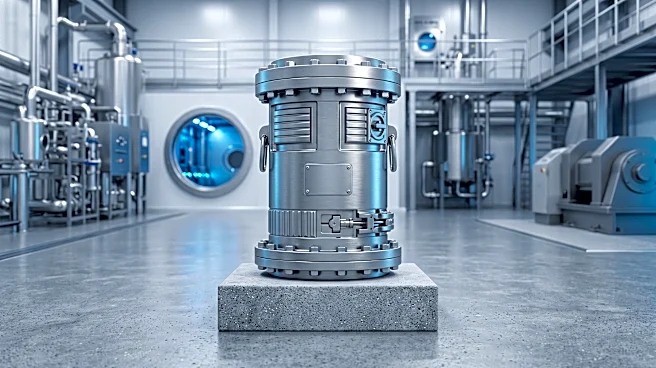
NANO Nuclear Energy Inc. has announced a Memorandum of Understanding (MOU) with Hyundai Engineering Co., Ltd. (HEC) to collaborate on the KRONOS MMR™ Energy System project at the University of Illinois Urbana-Champaign. This partnership aims to establish
a framework for advancing the microreactor project and to explore broader cooperation for future NANO Nuclear manufacturing and deployment activities. The MOU brings together NANO Nuclear's advanced reactor development program with HEC's extensive capabilities in engineering, procurement, construction, project management, supply chain, modularization, logistics, and industrial projects. Initially, the focus will be on project-execution planning, conventional and site-related work, procurement readiness, constructability, modularization, logistics, supply-chain development, and U.S. localization planning for the University of Illinois project. This collaboration is designed to integrate experienced project-execution capabilities into the KRONOS MMR™ project as it progresses through development stages.
Why It's Important?
This collaboration is significant for the advancement of microreactor technology in the United States. By combining NANO Nuclear's innovative reactor design with Hyundai Engineering's robust industrial and project delivery expertise, the partnership aims to streamline the transition of advanced nuclear technology from design to repeatable deployment. The focus on U.S. localization planning and supply chain development could bolster domestic manufacturing capabilities and create jobs within the nuclear energy sector. The involvement of a major international engineering firm like HEC could also accelerate the regulatory licensing process and eventual commercialization of the KRONOS MMR™ system. This initiative could serve as a model for future advanced nuclear projects, demonstrating how international partnerships can contribute to the development of carbon-free energy sources and enhance energy security in the U.S. The project at the University of Illinois could also provide valuable insights and experience for the broader adoption of small modular reactors.
What's Next?
NANO Nuclear and HEC plan to designate a working team to define potential project packages, clarify design and procurement interfaces, and identify unassigned work for the University of Illinois project. This team will also establish a disciplined basis for future contracting. Anticipated workstreams include studies on conventional facility constructability and modularization, construction sequencing, civil and site packages, supplier identification, long-lead-item planning, and U.S. and Korean supplier mapping. The MOU also contemplates future cooperation on U.S. reactor-component and core-manufacturing facility planning, modular-factory and production-line development, and standardization for future KRONOS MMR™ system deployments. Subject to technical and commercial evaluation, and regulatory requirements, HEC's role could expand to include architecture and engineering, engineering and procurement, and construction management for future projects.
Beyond the Headlines
This partnership underscores a growing trend in the energy sector towards advanced nuclear technologies, particularly microreactors, as a solution for reliable, carbon-free electricity. The emphasis on building a comprehensive industrial platform around the KRONOS MMR™ system, encompassing manufacturing, fuel, transportation, and project execution, highlights a strategic vision beyond just reactor development. This approach aims to create a scalable and repeatable model for nuclear energy deployment, addressing the historical challenges of cost and complexity associated with large-scale nuclear plants. The collaboration also leverages HEC's decade-long familiarity with the underlying MMR technology, providing continuity and institutional knowledge that could be crucial for successful project execution and regulatory approval. This could set a precedent for how advanced nuclear projects are structured and delivered, potentially influencing future energy policy and investment in the U.S.