









What's Happening?
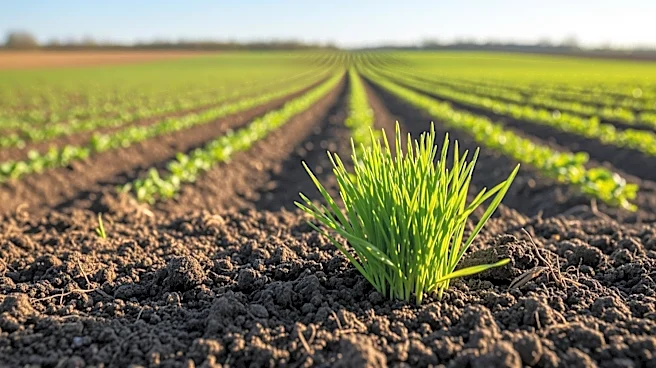
Major food companies, including Nestlé and PepsiCo, are increasingly adopting regenerative agriculture practices to improve soil health and reduce carbon emissions. Regenerative agriculture focuses on restoring soil fertility and enhancing carbon storage,
which can make agricultural systems more resilient to climate change. Companies like Soil Capital are working with farmers to implement practices such as reducing land disturbance, increasing plant diversity, and planting cover crops. These efforts aim to offset greenhouse gas emissions and improve the sustainability of food supply chains. However, experts debate the effectiveness of these methods in significantly mitigating climate change.
Why It's Important?
The shift towards regenerative agriculture by major food companies reflects a growing recognition of the need for sustainable practices in agriculture. As the sector is a significant contributor to global greenhouse gas emissions, improving soil health and carbon storage can play a crucial role in climate change mitigation. The adoption of regenerative practices can also enhance food security by making crops more resilient to climate impacts. However, the debate over the effectiveness of these methods highlights the need for continued research and innovation in sustainable agriculture. The involvement of large corporations can drive widespread adoption and investment in these practices, potentially transforming the agricultural industry.