









What's Happening?
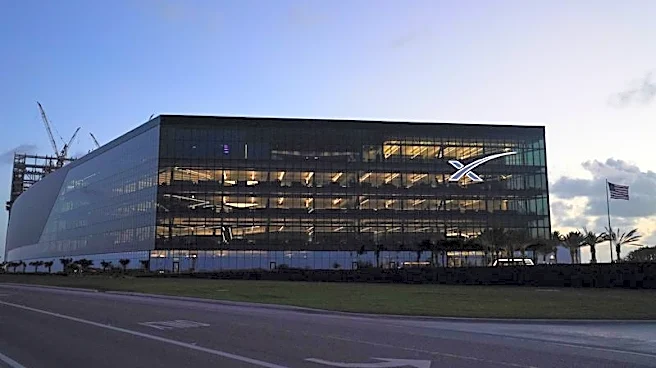
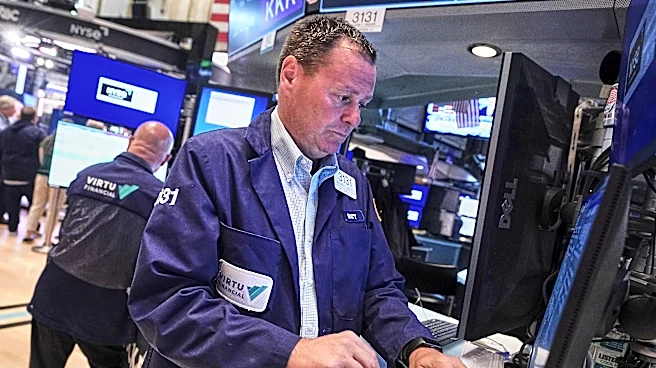
SpaceX, the aerospace company founded by Elon Musk, recently went public, resulting in Musk becoming a trillionaire on paper. The company's initial public offering (IPO) has positioned it as the sixth-most valuable public company, despite reporting a net
loss of $4.94 billion last year on $18.7 billion in revenue. SpaceX's valuation is largely driven by its ambitious future plans, including asteroid mining and space tourism, rather than its current aerospace and satellite operations. The company has also acquired Cursor, an AI-coding startup, for $60 billion in stock, further expanding its reach into the tech industry. SpaceX's market capitalization reached $1.7 trillion, highlighting the speculative nature of its valuation, which is heavily influenced by Musk's personal brand and his ability to attract attention and investment.
Why It's Important?
The IPO of SpaceX and Musk's resulting financial status underscore the growing influence of speculative investment in the modern economy. Musk's ability to leverage his personal brand and narrative has allowed SpaceX to achieve a valuation that defies traditional financial metrics. This development reflects a broader trend where perception and hype can outweigh fundamental business performance. The implications are significant for the stock market, as it raises questions about the sustainability of such valuations and the potential risks to investors. Additionally, Musk's financial power could have far-reaching effects on industries and public policy, given his influence over government contracts and geopolitical matters, as seen in his involvement in satellite connectivity in regions like Ukraine and Iran.
What's Next?
As SpaceX continues to navigate the public market, analysts predict potential volatility in its stock price, especially as lockup periods end and shareholders begin to sell. The company's future will depend on its ability to deliver on its ambitious goals and manage the speculative nature of its valuation. Musk's leadership and strategic decisions will be crucial in maintaining investor confidence and achieving long-term success. The acquisition of Cursor and the expansion into AI technology suggest a diversification strategy that could either bolster SpaceX's market position or expose it to new risks. Observers will be watching closely to see how SpaceX's story unfolds and whether it can sustain its current trajectory.
Beyond the Headlines
The rise of SpaceX and Musk's financial empire highlights the blurred lines between reality and perception in the financial world. Musk's approach to business, characterized by bold promises and a focus on narrative, challenges traditional notions of corporate governance and accountability. The company's success raises ethical questions about the role of individual influence in shaping market dynamics and the potential consequences for economic stability. As SpaceX continues to grow, it may face increased scrutiny from regulators and stakeholders concerned about the implications of its market dominance and the broader impact on society.