



What's Happening?
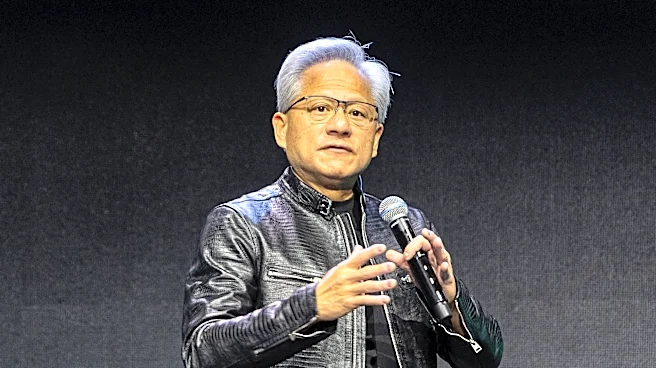
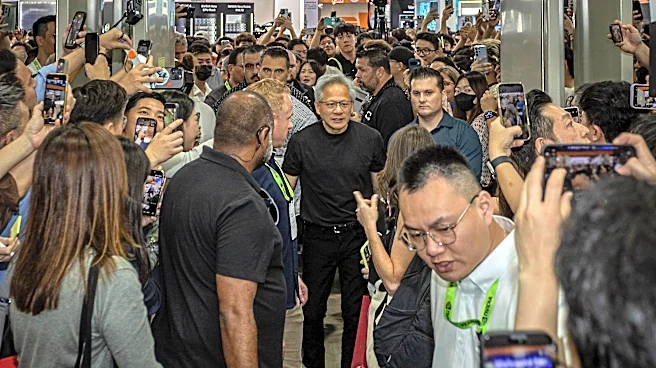
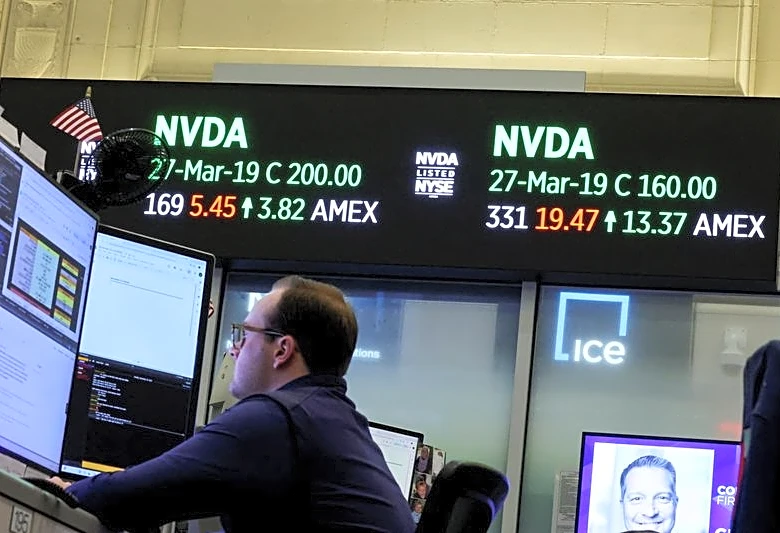
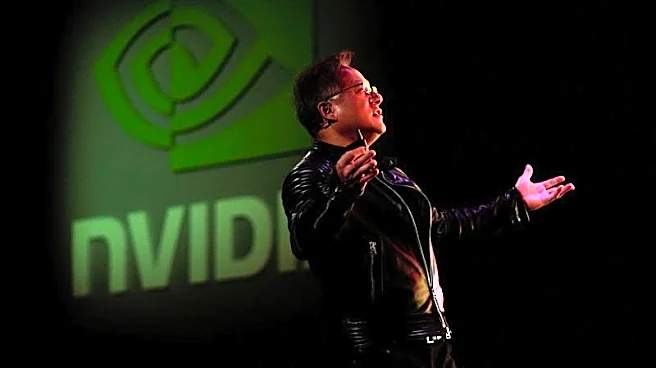
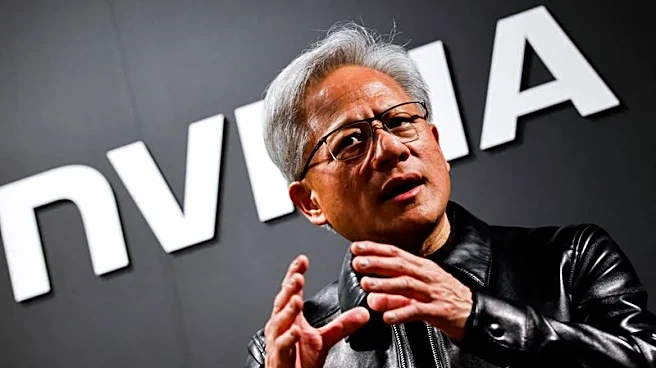
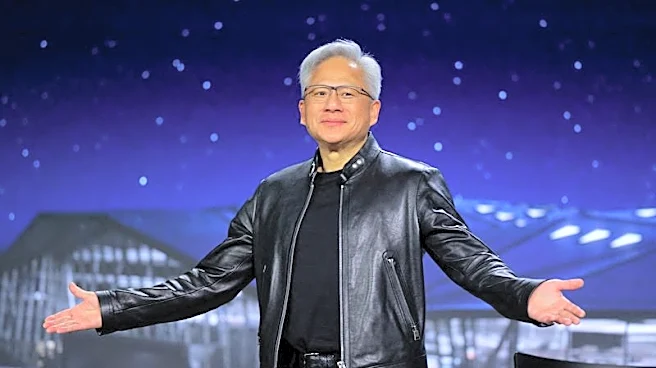
Nvidia shares surged approximately 33% following the reinstatement of its co-founder and long-time CEO, Jensen Huang. This move added at least $900 billion to the AI chip giant's market capitalization, increasing it from about $3.14 trillion to over $4
trillion. The rally occurred after Huang's previous ousting led to a significant market value loss for Nvidia, exceeding $1 trillion. The board's decision to reinstate Huang was accompanied by a statement confirming that his return poses no national security risk. An independent investigation into allegations that Huang was targeted by foreign intelligence will continue, with his full cooperation. This event highlights the substantial influence of a single leader on a major technology company's market performance.
Why It's Important?
The dramatic fluctuation in Nvidia's market value directly tied to Jensen Huang's presence underscores the critical role of visionary leadership in the technology sector, particularly in the rapidly evolving AI industry. For U.S. industries, this event demonstrates how investor confidence can be heavily influenced by key individuals, impacting stock performance and overall market stability. The board's decision to prioritize market value and investor sentiment by reinstating Huang, despite ongoing investigations, reflects the immense pressure on corporate governance to balance various stakeholder interests. This situation could set a precedent for how other major tech companies handle leadership crises, especially those involving figures deemed indispensable to their success and market standing. The incident also highlights the potential for significant market volatility in the AI sector, where investor sentiment can shift rapidly based on leadership changes.
What's Next?
The independent investigation into allegations that Jensen Huang was targeted by foreign intelligence will proceed, with Huang's cooperation. The outcome of this investigation could have further implications for Nvidia and its leadership, depending on its findings. Investors will likely continue to monitor the situation closely, as any new developments could influence stock performance. The U.S. government's stance, particularly regarding national security concerns, will remain a key factor. The market's strong positive reaction to Huang's return suggests that his leadership is seen as crucial for Nvidia's continued success in the competitive AI chip market. Future strategic decisions by Nvidia, especially concerning its market position and potential expansion, will be scrutinized in light of this recent leadership change.
Beyond the Headlines
This event raises deeper questions about corporate governance, the power of individual leaders in modern corporations, and the balance between shareholder interests and ethical considerations. The board's decision to reinstate Huang, despite unconfirmed reports and ongoing investigations, suggests that the perceived economic value of a leader can outweigh other concerns in the short term. This could have long-term implications for corporate accountability and the standards expected of executives in high-stakes industries. Furthermore, the mention of national security risks and foreign intelligence targeting highlights the geopolitical dimensions of the technology sector, particularly concerning advanced AI capabilities. The incident also implicitly touches upon the 'agency problem' in corporate governance, where directors must act in the best interests of shareholders while navigating complex ethical and legal landscapes.