





What's Happening?
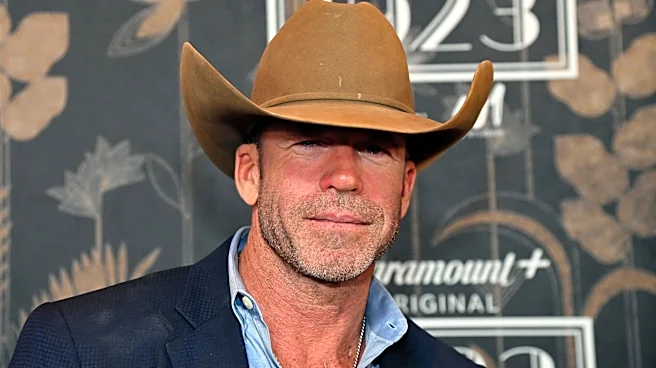
Billy Bob Thornton recently commented on Taylor Sheridan's career trajectory, noting that "Hollywood wasn't nice" to Sheridan, but "Texas accepted" him. Thornton, who stars in Sheridan's series 'Landman,' shared these insights in an interview for Town
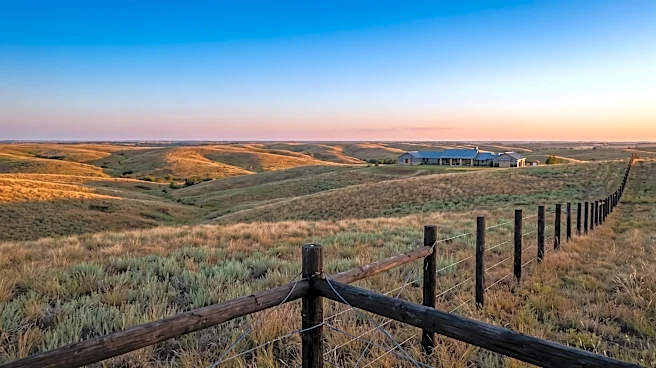
& Country. Sheridan, now a prolific TV creator known for hits like 'Yellowstone' and 'Mayor of Kingstown,' faced significant challenges as a struggling actor in Los Angeles, including periods of homelessness where he lived in his car. Despite these hardships, Sheridan pivoted to screenwriting, a move that ultimately transformed his career. After achieving success, he returned to Texas, his childhood home, and began acquiring vast ranch land, including the Four Sixes (6666) Ranch and Bosque Ranch. Thornton emphasized that the Texas ranching community embraced Sheridan because of his authentic connection to the lifestyle, contrasting it with a perceived lack of authenticity in Hollywood.
Why It's Important?
This narrative highlights the often-unforgiving nature of the entertainment industry and the potential for creative individuals to find success and authenticity outside traditional Hollywood structures. Sheridan's journey from a struggling actor to a successful showrunner and landowner in Texas demonstrates a significant shift in how creative power and influence can be cultivated. His decision to base his operations and creative inspiration in Texas, rather than Los Angeles, challenges the conventional wisdom of the entertainment industry. This move not only provides him with a unique creative wellspring, influencing the stories he tells, but also fosters a different kind of industry ecosystem. For aspiring creators, Sheridan's story offers a powerful example of perseverance and the importance of finding an environment that nurtures one's artistic vision, even if it means departing from established centers of power.
What's Next?
Taylor Sheridan is expected to continue expanding his television empire, drawing further inspiration from his life and experiences in Texas. His unique approach of inviting cast members to his ranch for meetings, rather than conducting business in Los Angeles, suggests a continued decentralization of his creative process. This model could influence other creators to explore alternative production hubs and creative environments outside of traditional Hollywood. The success of his Texas-centric narratives, which resonate with a broad audience, indicates a sustained demand for authentic storytelling rooted in specific American cultural landscapes. As Sheridan's influence grows, his model might encourage more investment and development in regional film and television production, potentially creating new opportunities for local talent and economies in areas like Texas. His ongoing projects will likely continue to explore themes of land, family, and the American West, further solidifying his distinct brand in the entertainment industry.
Beyond the Headlines
Sheridan's story delves into deeper themes of authenticity, regional identity, and the evolving landscape of American storytelling. His embrace of Texas and its ranching culture is not merely a personal preference but a strategic choice that imbues his work with a distinct sense of place and character often missing in more homogenized Hollywood productions. This move challenges the notion that creative success is solely defined by proximity to Los Angeles. It also speaks to a broader cultural yearning for narratives that reflect diverse American experiences, moving beyond the coastal urban centers. The contrast between Hollywood's initial rejection and Texas's acceptance of Sheridan underscores a cultural divide and the value placed on 'realness' in different contexts. His success could inspire a re-evaluation of how talent is nurtured and recognized, emphasizing genuine connection to subject matter over industry-standard networking and geographical location. This shift could lead to a more diverse and geographically distributed creative industry in the long term.