




What's Happening?
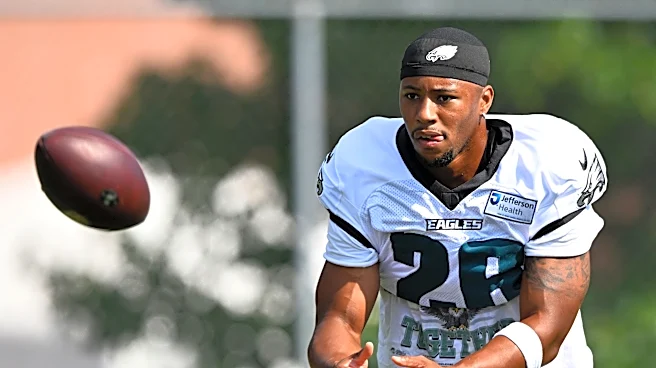
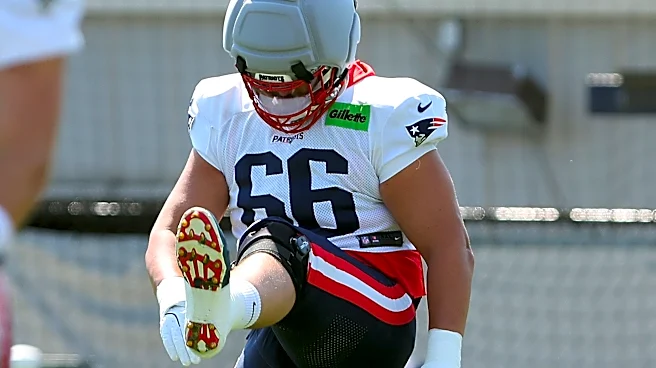
Philadelphia Eagles running back Saquon Barkley has voiced his strong disapproval of joint practices, particularly after a recent session with the New England Patriots. Barkley stated that he believes one day of joint practice is sufficient, but extended
sessions often lead to unproductive, ego-driven confrontations among players. He noted that players tend to prioritize refusing to back down from opponents in different colored jerseys over focusing on improving their skills. Barkley described the environment as an "ego-filled sport with a lot of men," where pushing and shoving often escalate into immature exchanges. He acknowledged his own occasional role as a "troublemaker" but emphasized the need for players to better manage these situations and avoid letting them disrupt the practice's primary objective of improvement.
Why It's Important?
Saquon Barkley's comments highlight a recurring issue within professional sports, particularly in the NFL, regarding the efficacy and potential downsides of joint practices. While these sessions are designed to offer teams valuable competitive drills against different opponents, Barkley's perspective suggests they can sometimes devolve into unproductive skirmishes driven by individual egos. This can detract from the intended benefits of skill development and team cohesion, potentially leading to unnecessary injuries or disciplinary issues. For NFL teams, the balance between competitive intensity and controlled practice environments is crucial for player safety and preparation. The sentiment expressed by a prominent player like Barkley could prompt discussions among coaches and league officials about optimizing the structure and duration of joint practices to maximize their benefits while minimizing their drawbacks.
What's Next?
Barkley's public statements could spark further debate within the NFL community regarding the format and utility of joint practices. While some coaches and players may value the competitive edge and diverse challenges these practices offer, others might echo Barkley's concerns about their potential for disruption and conflict. It is possible that teams might re-evaluate their approach to joint practices, potentially opting for shorter sessions or implementing stricter rules to mitigate confrontations. The league might also consider issuing guidelines or recommendations to ensure these practices remain productive and safe. Individual players, particularly those with strong personalities, may be encouraged to exercise more self-control during these sessions to prevent escalations. Ultimately, the goal will be to find a balance that allows for competitive training without compromising player safety or fostering unnecessary animosity.
Beyond the Headlines
Beyond the immediate concerns of practice efficiency and player conduct, Barkley's remarks touch upon the broader culture of professional sports, where ego and competitive drive are double-edged swords. While these traits are essential for success, they can also lead to counterproductive behaviors when not properly managed. The dynamic of joint practices, where players from different teams clash, often brings these cultural aspects to the forefront. This situation also reflects the ongoing challenge for coaches and team management to instill discipline and focus within highly competitive environments. The incident serves as a reminder that even in structured professional settings, human elements like ego and emotion play a significant role, requiring constant attention and management to ensure that the primary objectives of training and development are met effectively.