


What's Happening?
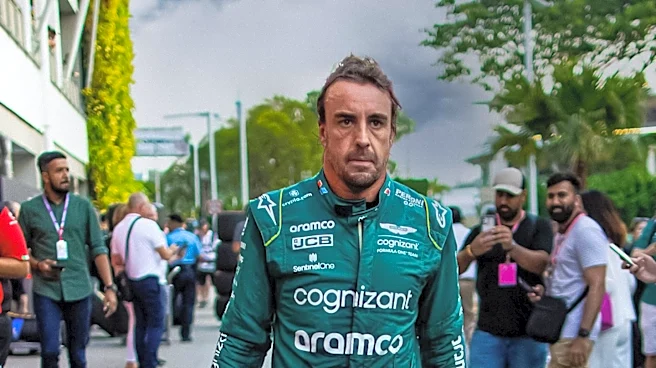
Former world champion Jenson Button believes that maintaining a stable driver lineup, specifically with Fernando Alonso and Lance Stroll, is crucial for Aston Martin's competitiveness in Formula 1. According to Formula 1 Official, Button highlighted that continuity
fosters a comfortable atmosphere within the garage, enabling drivers to maximize their skills. Alonso's decision to remain with the team for the upcoming season has provided a significant boost to the project. Button noted that while drivers often switch teams seeking better opportunities, the team environment and mutual trust between drivers and the team are more impactful than the car's badge. He stressed the importance of feedback from both drivers, stating that while Alonso is a world champion, Stroll's input is equally vital for engineers to understand the car's behavior under different driving styles and make necessary adjustments.
Why It's Important?
Button's insights underscore a critical aspect of Formula 1 team dynamics: the value of stability and consistent feedback. In a sport where technological advancements are rapid, having a consistent driver pairing allows engineers to gather reliable data and make targeted improvements to the car. This continuity helps build a cohesive team culture, which can translate into better on-track performance. For Aston Martin, a relatively newer front-running team, this stability is even more vital as they aim to establish themselves as consistent contenders. The dual input from both Alonso and Stroll, despite their differing experiences, provides a comprehensive understanding of the car's strengths and weaknesses, which is essential for developing a winning machine. Without this stability, the team risks inconsistent data and a slower development curve, hindering their ability to compete for points and podiums.
What's Next?
Aston Martin's strategy will likely continue to prioritize this driver continuity, leveraging the combined experience and feedback of Alonso and Stroll. The team will focus on integrating this feedback into their car development process for upcoming seasons. Beyond on-track performance, Aston Martin is also looking to expand its brand reach. Matt Chapman, Head of Licensing and Merchandise, indicated the team's interest in connecting with a wider audience through initiatives like partnerships in sports such as padel. This brand expansion aims to build a global community around the Aston Martin F1 team, moving beyond traditional motorsport fans. The success of these initiatives, combined with improved on-track performance driven by driver continuity, will be key to the team's overall growth and long-term sustainability in Formula 1.
Beyond the Headlines
The emphasis on driver continuity by Jenson Button highlights a broader philosophical debate in Formula 1: whether a team should prioritize star power or stability. While securing top-tier drivers like Alonso is crucial, Button's argument suggests that a stable partnership, even if one driver is less decorated, can yield greater long-term benefits. This approach fosters a collaborative environment where engineers and drivers work in tandem, building a shared understanding of the car's development trajectory. It also reduces the disruption and adaptation period associated with frequent driver changes. Furthermore, Aston Martin's move to expand its brand into areas like padel reflects a growing trend in sports marketing, where F1 teams are diversifying their engagement strategies to tap into new demographics and revenue streams, transforming themselves into lifestyle brands beyond just racing entities.