




What's Happening?
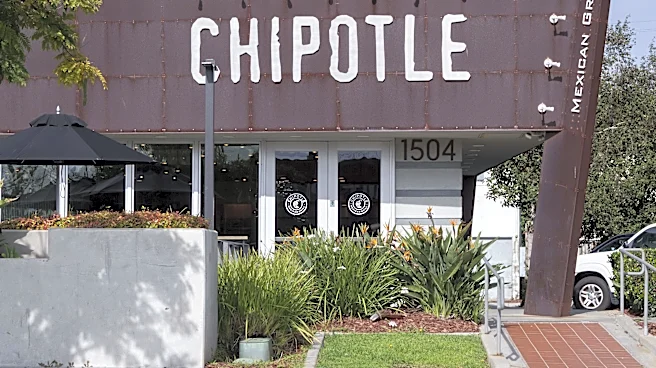
Chipotle, the fast-casual restaurant chain, is actively implementing artificial intelligence (AI) across its operations to improve efficiency and employee experience. Arlie Sisson, Chipotle's chief digital officer, highlights three key AI projects. The
first, an AI assistant named 'Ava Cado,' has significantly reduced the average hiring time from 12 days to four, nearly doubling applicant numbers and increasing application completion rates. The second project, 'Cook to Needs,' is an AI system that analyzes demand and recommends optimal fresh food preparation quantities, currently being tested in 500 locations with plans for national expansion. This system aims to reduce food waste and ensure customer satisfaction by accounting for various factors like promotions, local events, and even avocado sizes. The third initiative involves developing an AI assistant for general managers to provide real-time information and answer routine questions, freeing them from tedious administrative tasks.
Why It's Important?
Chipotle's strategic adoption of AI demonstrates a practical application of the technology that directly impacts business operations and employee productivity in the U.S. restaurant industry. By automating hiring processes, the company can more quickly staff its thousands of restaurants, addressing a common challenge in the service sector. The 'Cook to Needs' system has the potential to significantly reduce food waste, leading to cost savings and improved sustainability, while also enhancing customer experience by ensuring product availability. Empowering managers with AI assistants allows them to focus on higher-value tasks like employee training and customer interaction, rather than administrative duties. This approach suggests that AI's most impactful applications may lie in mundane yet critical operational improvements, translating into lower costs, higher sales, and more productive employees across the industry.
What's Next?
Chipotle plans to expand its 'Cook to Needs' AI system nationally after successful testing, indicating a broader integration of AI into its supply chain and kitchen operations. The AI assistant for general managers is in an early testing phase, with future plans to make these tools accessible on mobile tablets, allowing managers to use them while actively working on the restaurant floor. This continuous rollout of AI solutions suggests a future where technology plays an even more integral role in the day-to-day management of restaurant chains. The success of these initiatives could serve as a model for other companies in the food service and retail sectors, encouraging wider adoption of AI for operational efficiency and employee empowerment. The focus on freeing employees from tedious work to concentrate on human-centric tasks could also influence future workforce development strategies.
Beyond the Headlines
Chipotle's AI strategy challenges the common narrative that AI primarily leads to job displacement. Instead, it emphasizes how AI can augment human capabilities, allowing employees to engage in more meaningful and impactful work. This approach highlights the potential for AI to improve job satisfaction and retention in industries often characterized by high turnover. The company's focus on practical, 'mundane' applications of AI, rather than speculative or overly ambitious projects, offers a realistic blueprint for how businesses can achieve tangible returns on their AI investments. This case study could influence how companies across various sectors evaluate and implement AI, shifting the focus from purely cost-cutting measures to strategies that enhance human capital and operational excellence. It also underscores the importance of integrating AI tools seamlessly into existing workflows to ensure they genuinely make employees' days easier.