
What's Happening?
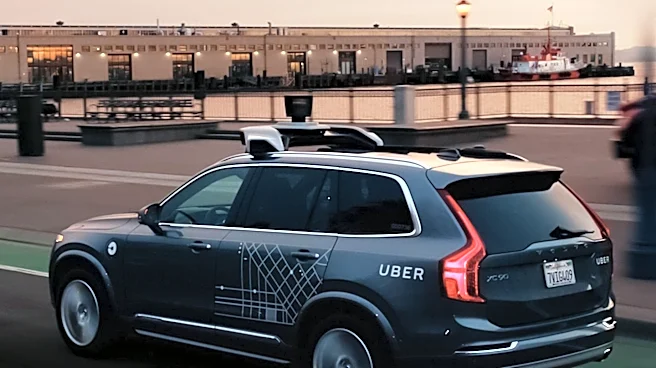
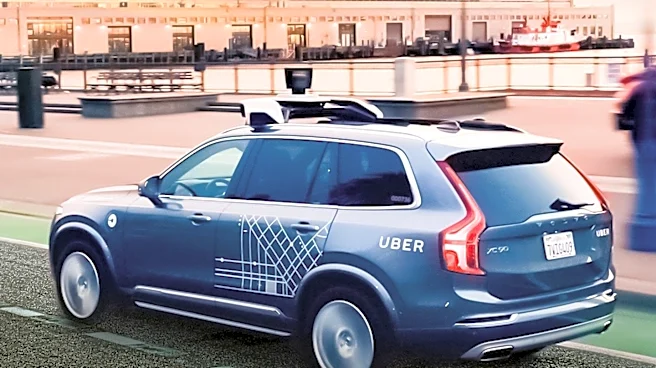
Nuro, Uber, and Lucid have commenced fully driverless testing of robotaxis on public roads in the San Francisco Bay Area. This marks a significant step towards their planned commercial launch in early 2027. The testing involves Lucid Gravity robotaxis equipped
with Nuro's Level 4 'Nuro Driver' system, which integrates cameras, solid-state lidar, and radar, along with a roof-mounted LED 'halo' for rider identification. Employee rides in these driverless vehicles are set to begin shortly. This development follows nearly a year of supervised testing in both the Bay Area and Houston, where a safety driver was present. Nuro has also conducted extensive closed-track testing in Las Vegas to prepare the software for real-world driving conditions. The initial driverless testing will occur in Palo Alto, Mountain View, Los Altos, and Sunnyvale, with plans for broader expansion across the Bay Area next year. Lucid has supplied over 100 upgraded Gravity SUVs for this testing phase, and manufacturing of the commercial fleet is expected to start soon.
Why It's Important?
This initiative is crucial for Uber's strategy to re-establish its presence in the autonomous ride-hailing market and challenge the dominance of rivals like Waymo and Zoox. Uber has made substantial investments, committing approximately $500 million each to Nuro and Lucid, and intends to deploy at least 35,000 Lucid vehicles with Nuro's autonomous technology in the coming years. The successful removal of human safety operators from these vehicles represents a major milestone, indicating the advanced state of Nuro's autonomous driving technology. This move could intensify competition within the burgeoning robotaxi sector, as Uber aims to have at least 2,000 fully driverless vehicles on its platform by the end of next year. The partnership also highlights the growing trend of collaboration between ride-hailing platforms, autonomous technology developers, and electric vehicle manufacturers to accelerate the deployment of self-driving services.
What's Next?
The companies plan to launch commercial robotaxi services to the public in the San Francisco Bay Area in the first quarter of 2027, with Houston following later that year. Uber has committed to purchasing at least 35,000 Lucid vehicles, including future midsize models, to scale its global autonomous fleet. Nuro's Chief Operating Officer, Andrew Chapin, noted that while the commercial launch target was slightly pushed from late 2026 to early 2027, this adjustment is minor given the complexities of launching an autonomous service. The next challenge for Nuro will be to prove its competitiveness in an increasingly crowded robotaxi market, even within Uber's own network, which includes other partners like Zoox and Motional. The expansion of driverless testing to more Bay Area cities is also anticipated in the coming year.
Beyond the Headlines
The launch of fully driverless testing by Nuro, Uber, and Lucid underscores a significant shift in the transportation industry, moving towards a future where autonomous vehicles could become a common mode of transport. This development raises important questions about public acceptance, regulatory frameworks, and the ethical implications of AI-driven decision-making in real-world driving scenarios. The partnership's focus on a 'luxurious' robotaxi experience with the Lucid Gravity also suggests a potential segmentation in the autonomous ride-hailing market, catering to different consumer preferences. Furthermore, the increasing number of autonomous vehicle companies entering the market, coupled with recent scrutiny and incidents involving other players like Waymo, highlights the ongoing challenges and the critical need for robust safety protocols and public trust as this technology continues to evolve.