






What's Happening?
Poor bedroom lighting is identified as a significant factor disrupting sleep quality in U.S. homes. Many existing bedroom lighting setups, often using fixed cool white bulbs with consistent brightness, work against the body's natural circadian rhythm.
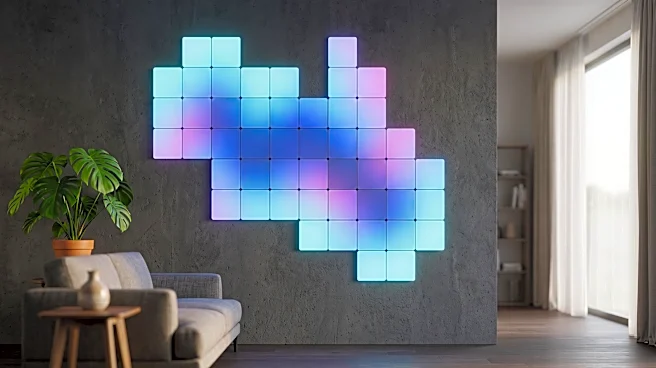
Bright, blue-toned lights, particularly after sunset, suppress melatonin production, signaling to the brain that it's daytime and making it harder to fall asleep. Smart lighting offers solutions to these issues. Tunable smart bulbs can shift color and tint to warmer tones after sunset, limiting melatonin suppression. Smart home routines can be programmed to gradually dim and warm bedroom lighting over 20 to 30 minutes, creating a wind-down transition. Additionally, smart alarms can mimic a gradual sunrise, helping the body transition from sleep to wakefulness more naturally, which can be particularly beneficial for individuals experiencing seasonal affective disorder (SAD). These smart lighting solutions can be integrated with other smart home elements, such as thermostats, to create comprehensive sleep-friendly environments.
Why It's Important?
The widespread issue of poor sleep quality in the U.S. has significant public health and economic implications. Chronic sleep deprivation can lead to various health problems, reduced productivity, and increased healthcare costs. By addressing bedroom lighting, smart technology offers a practical and accessible solution to improve sleep hygiene. The ability to customize lighting to align with natural circadian rhythms can enhance melatonin production, making it easier for individuals to fall asleep and wake up refreshed. This can lead to improved overall well-being, better cognitive function, and increased daily productivity for millions of Americans. The integration of smart lighting with other smart home systems, such as temperature control, further enhances its impact, creating a holistic approach to sleep optimization. As smart home technology becomes more prevalent, its role in promoting healthier lifestyles and addressing common health issues like sleep disruption will become increasingly vital.
Beyond the Headlines
The adoption of smart lighting for sleep improvement extends beyond individual well-being, touching upon broader societal trends and technological integration. The emphasis on circadian wellness highlights a growing understanding of the intricate relationship between our environment and biological rhythms. This shift suggests a future where homes are not just functional spaces but actively contribute to the health and well-being of their occupants through intelligent design and technology. The increasing sophistication of smart home systems, allowing for seamless integration of lighting, temperature, and sound, points towards a future where personalized environmental control becomes a standard expectation. This could also influence architectural design and urban planning, with a greater focus on creating spaces that support natural human rhythms. Furthermore, the data collected from such integrated systems could offer valuable insights into sleep patterns and environmental impacts, potentially leading to further innovations in health technology and personalized wellness solutions.