





What's Happening?
Eli Electric Vehicles, a U.S. company, has unveiled its new L7e Zero MX micro-EV at EICMA in Milan, expanding its Zero family to include models with a top speed of 80km/h (50mph). This new model, along with the Eli Zero Race Edition, utilizes a single
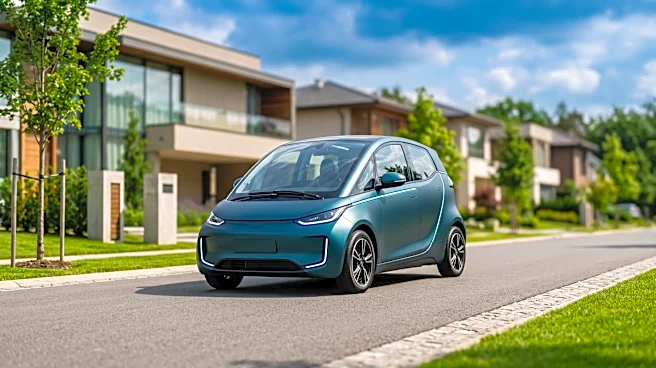
96V platform and is designed to move beyond purely urban streets, offering greater versatility than previous 45km/h L6e models. The Zero MX maintains the Zero's 2.25-meter length but features up to 20kW of peak power and a 14.4kWh lithium iron phosphate battery, providing a range of up to 200km. Standard features include air conditioning, ABS, electric power steering, and keyless entry. While currently available in several European markets, Eli plans to launch a U.S. version as a street-legal low-speed vehicle, with prices starting from €10,500 (US$12,200).
Why It's Important?
The introduction of the Eli Zero MX to the U.S. market as a street-legal low-speed vehicle signifies a growing trend in urban mobility and the electric vehicle sector. This expansion offers American consumers a new option for compact, efficient, and environmentally friendly transportation, particularly suited for city driving and short-distance commutes. As urban areas become more congested and environmental concerns grow, micro-EVs like the Eli Zero MX can play a crucial role in reducing traffic, parking difficulties, and carbon emissions. The competitive pricing, starting at approximately $12,200, could make electric vehicle ownership more accessible to a broader demographic. This move also highlights the increasing innovation within the EV market, with companies focusing on diverse vehicle types to meet specific consumer needs and urban challenges.
What's Next?
Eli Electric Vehicles' next step involves launching the U.S. version of the Zero MX as a street-legal low-speed vehicle. This will require navigating specific U.S. regulations for low-speed electric vehicles, which can vary by state. The company will likely focus on establishing distribution networks and marketing strategies tailored to the American market, emphasizing the vehicle's urban utility, environmental benefits, and cost-effectiveness. As the micro-EV segment matures, Eli may also explore partnerships with urban planning initiatives or ride-sharing services to integrate their vehicles into broader smart city ecosystems. The success of the Zero MX in the U.S. will depend on consumer adoption, infrastructure development for charging, and favorable regulatory environments that support the growth of compact electric transportation solutions.
Beyond the Headlines
The emergence of micro-EVs like the Eli Zero MX reflects a fundamental shift in how urban transportation is conceived. Beyond simply providing an alternative to traditional cars, these vehicles embody a philosophy of designing transportation 'for cities, and not the other way around,' as stated by Marcus Li, founder and Chief Executive of Eli Electric Vehicles. This approach prioritizes community and human-centric urban design, aiming to reduce the dominance of large vehicles and reclaim urban spaces for people. The widespread adoption of micro-EVs could lead to significant changes in urban infrastructure, including the development of more compact parking solutions, dedicated micro-mobility lanes, and integrated charging networks. This trend also raises questions about the future of personal vehicle ownership, potentially fostering a move towards more shared or on-demand micro-mobility services, ultimately reshaping the urban landscape and daily commutes.