


What's Happening?
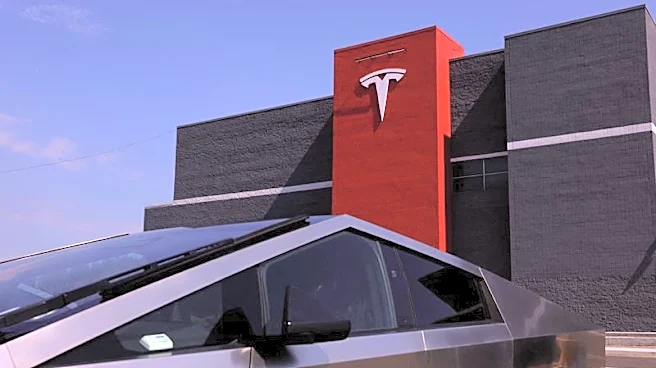
Speculation is growing regarding a potential merger between Tesla and SpaceX, both led by Elon Musk. This comes after Tesla's next-generation Roadster made its debut at a SpaceX test site, showcasing innovations like thrusters. While the Roadster's unveiling
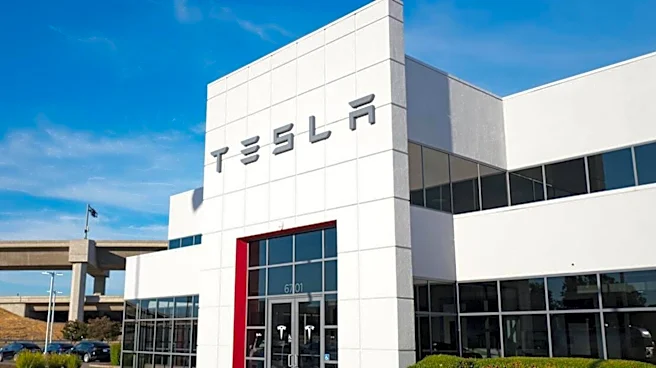
did not significantly impact Tesla's stock, the merger speculation is a different matter. CNBC reported that SpaceX is valued at approximately $2 trillion, surpassing Tesla's roughly $1.4 trillion market capitalization. Barclays analyst Dan Levy reportedly predicted a transaction could occur before the end of 2026. If a merger were announced, Tesla shares could see a rise due to the potential for new opportunities arising from SpaceX's rocket and communication technologies. However, investors would need clarity on valuation, financing, and shareholder ownership stakes, as a transaction that dilutes shareholders or adds costly obligations could lead to disappointment.
Why It's Important?
A potential merger between Tesla and SpaceX could fundamentally reshape the investment landscape for both companies. For Tesla shareholders, it would mean their investment extends beyond electric vehicles into aerospace and advanced technologies, potentially altering how Wall Street values Tesla. The integration of SpaceX's capabilities, particularly in rocket and communication technologies, could open new revenue streams and technological synergies for Tesla, enhancing its long-term growth prospects. Conversely, the complexity of such a large-scale merger, including valuation, financing, and the potential for shareholder dilution, introduces significant risks. Investors are closely watching these developments, as the outcome could determine the future trajectory of two of the most prominent companies in the technology and automotive sectors, influencing broader market sentiment towards innovation-driven enterprises.
What's Next?
Investors are advised to monitor news related to the potential merger, focusing on details concerning valuation, financing structures, and the impact on shareholder ownership. The success of Tesla's ventures into areas like energy, robotics, artificial intelligence, and robotaxis, along with regulatory scrutiny of its driverless operations, will also be critical factors influencing future profits and stock performance. While the Roadster is a high-profile product, its low-volume nature means it is unlikely to be a primary driver of Tesla's financial performance. Instead, the strategic implications of a SpaceX merger and the progress of Tesla's broader technological ambitions will be key determinants for investors in the coming months.
Beyond the Headlines
The discussion around a Tesla-SpaceX merger highlights a growing trend of convergence between seemingly disparate industries, driven by technological advancements and visionary leadership. The idea of combining an automotive giant with a space exploration company suggests a future where technological ecosystems are highly integrated, potentially leading to unprecedented innovations in areas like autonomous transport, energy solutions, and even space-based infrastructure. This also raises questions about corporate governance and the concentration of power, as both entities are largely controlled by Elon Musk. The regulatory environment for such a merged entity would be complex, spanning multiple sectors and potentially setting new precedents for antitrust and market competition. The long-term implications could extend to how diversified technology conglomerates are structured and valued in the 21st century.