






What's Happening?
The HBO series 'The Gilded Age' is being lauded for its portrayal of a thriving Black community in 1880s America, showcasing aspects of Black life beyond struggle and racism. Producer and director Salli Richardson-Whitfield emphasized the show's commitment
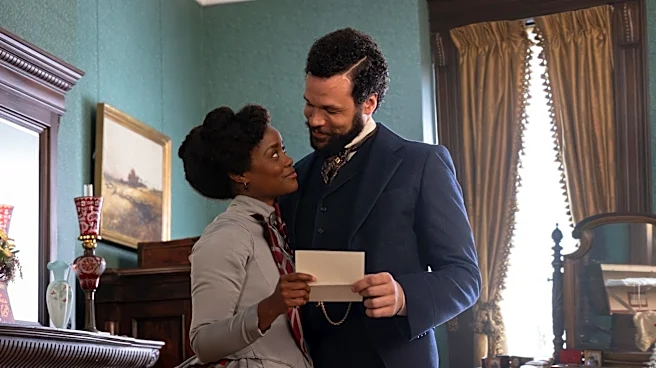
to depicting Black wealth, beauty, family, and community during this historical period. She highlighted that the series aims to present an authentic view of Black life, including joy, romance, and ambition, rather than solely focusing on adversity. The show features characters like Peggy Scott, who evolves from a supporting role to a fully developed individual with her own ambitions and personal life, actively speaking up for her community. This approach is supported by having Black representation behind the scenes, including a Black historian and writer, to ensure historical accuracy and diverse perspectives.
Why It's Important?
This representation is significant as it challenges conventional narratives of the Gilded Age, which often overlook the complexities and successes within Black communities during that era. By showcasing Black wealth and community building, the series provides a more complete and nuanced understanding of American history. It offers audiences a different perspective on the period, moving beyond the common focus on racial oppression to include stories of resilience, economic advancement, and cultural richness. This expanded view can foster a greater appreciation for the diverse experiences that shaped the nation and can inspire similar inclusive storytelling in historical dramas. The emphasis on authentic representation behind the scenes also underscores the importance of diverse voices in shaping narratives that accurately reflect historical realities.
What's Next?
As 'The Gilded Age' continues, viewers can anticipate further exploration of the multifaceted lives of its Black characters and the broader Black community in 19th-century New York. The commitment to authentic storytelling, supported by Black historians and writers, suggests that future seasons will likely delve deeper into these narratives, potentially uncovering more overlooked aspects of the era. This approach could set a precedent for other historical productions to adopt more inclusive and accurate portrayals of marginalized communities. The show's success in highlighting Black wealth and community may also encourage a broader re-examination of historical records and narratives to uncover similar stories that have been historically underrepresented.
Beyond the Headlines
The series' focus on Black wealth and community in the Gilded Age has deeper implications for contemporary discussions about race, history, and representation. It serves as a powerful counter-narrative to the often-singular portrayal of Black history as solely defined by struggle. By illustrating periods of prosperity and community building, the show contributes to a more holistic understanding of Black identity and resilience. This can help to dismantle stereotypes and foster a more inclusive historical consciousness. Furthermore, the show's methodology of incorporating Black historians and writers highlights the ethical imperative of diverse perspectives in historical interpretation and media production, ensuring that stories are told with accuracy and cultural sensitivity.