







What's Happening?
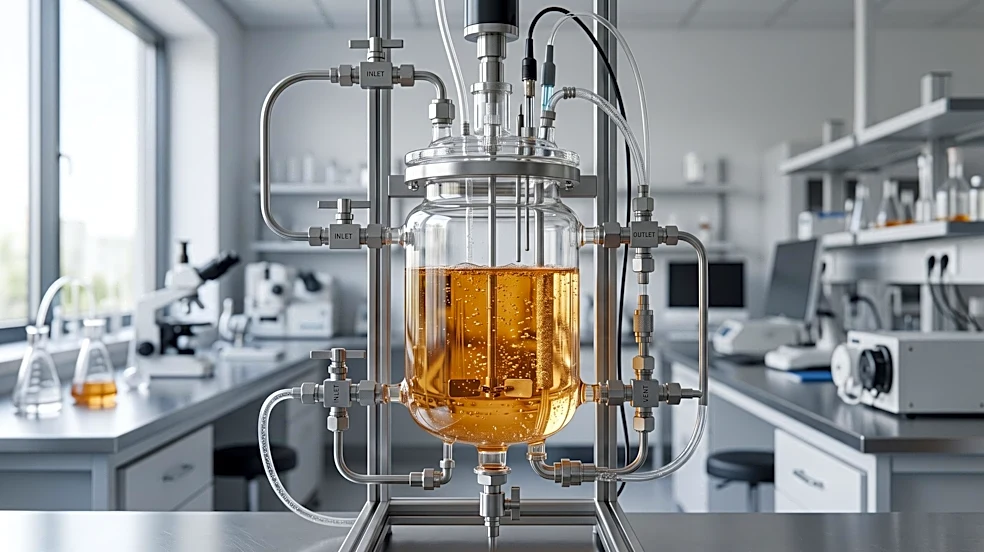
Amii and New Harvest have collaborated on research that utilizes machine learning to advance cellular agriculture, focusing on optimizing culture media formulations. Their work, detailed in two new papers, addresses key challenges in the field, particularly
the high cost and complexity of finding optimal nutrient mixes for cell growth. One paper, published last month, describes the use of Bayesian optimization to develop a model that can predict more effective culture media formulations significantly faster than traditional statistical methods, sometimes in as few as half the trials. The other paper, published in June, created a dataset on the heat tolerance of growth factors used in cultured meat, combining laboratory testing, computer modeling, and LLM-assisted research reviews. This research builds on a long-term collaboration between Amii, an artificial intelligence institute, and New Harvest, a non-profit dedicated to advancing cellular agriculture, with both organizations committed to open-source data and models.
Why It's Important?
The optimization of culture media is a critical factor in the economic viability of cellular agriculture, as media costs can represent a substantial portion of production expenses. By accelerating the discovery of optimal formulations, this research has the potential to dramatically lower production costs and shorten project timelines for cultivated meat and other cell-based products. This is crucial for the scalability and commercialization of cellular agriculture, which aims to address global food industry challenges such as sustainability, food-borne diseases, and ethical concerns related to animal husbandry. The creation of an open-source dataset on growth factor thermostability also contributes to food safety and regulatory understanding, providing a valuable resource for the wider scientific community. This collaboration highlights the growing role of artificial intelligence in scientific discovery and its potential to drive innovation in sustainable food production.
What's Next?
The research papers are intended to offer useful new resources to the field of cellular agriculture, supporting further research beyond this collaboration. By making their data and models open, Amii and New Harvest aim to build a foundation for the entire field to utilize machine learning solutions, addressing the current lack of public data and researchers with expertise in both AI and cellular agriculture. The immediate next steps involve the scientific community leveraging these open-source tools and datasets to further refine culture media optimization and enhance understanding of growth factor behavior. This could lead to more efficient and cost-effective production methods for cellular agriculture, potentially accelerating the development and market entry of cultivated meat and other cell-based food products. Continued collaboration between AI experts and cellular agriculture researchers is anticipated to tackle other bottlenecks in the technology.
Beyond the Headlines
This collaboration signifies a paradigm shift in scientific research, where advanced computational methods like machine learning are increasingly integrated with biological experimentation to solve complex problems. The open-source nature of this research is particularly noteworthy, fostering a collaborative environment that can accelerate progress across the entire cellular agriculture industry. By democratizing access to data and models, it can empower smaller startups and academic institutions to contribute to innovation, potentially leading to a more diverse and resilient ecosystem for alternative protein development. Furthermore, the focus on cost efficiency and safety through scientific rigor and data-driven approaches addresses two of the most significant barriers to the widespread adoption of cellular agriculture, paving the way for a future where sustainable and ethically produced food sources are more readily available.