

What's Happening?
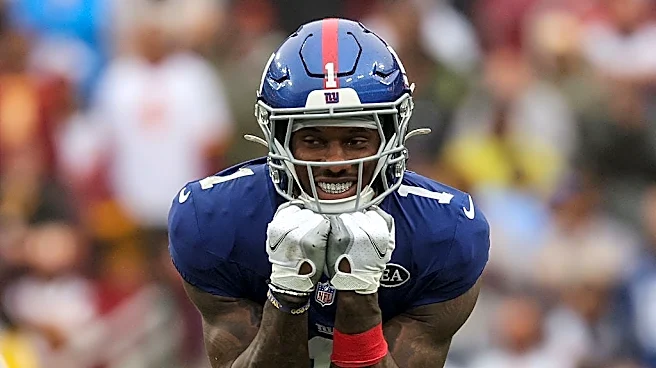
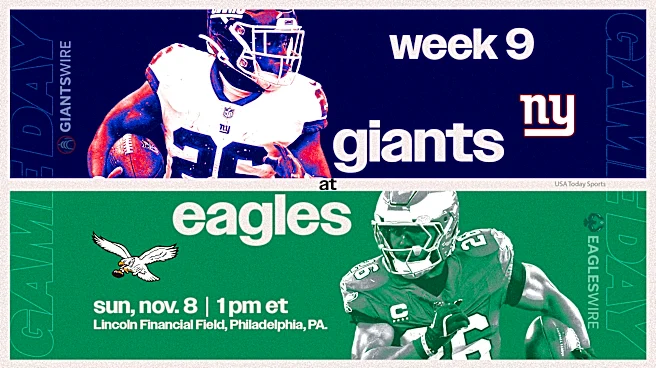
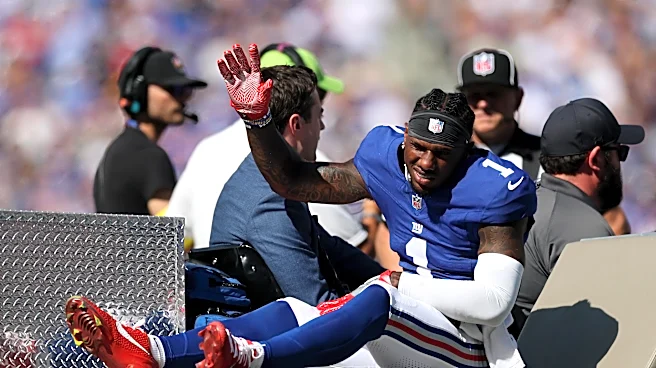
New York Giants wide receiver Malik Nabers has publicly defended his body language and sideline demeanor following criticism from FOX broadcast analysts Greg Olsen and Joe Davis during the Giants' 19-11 victory over the Philadelphia Eagles. During the game,
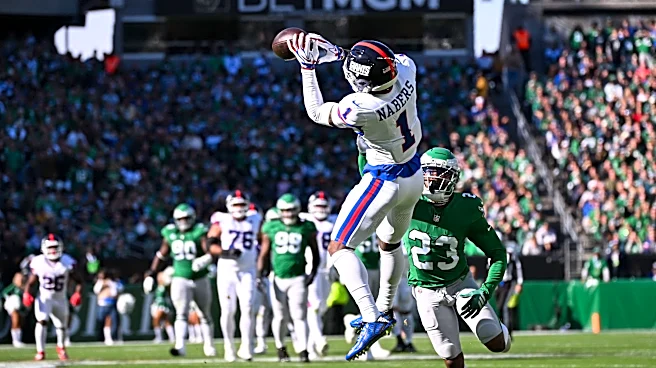
cameras captured Nabers displaying visible frustration, particularly after a dropped pass that would have been his third touchdown of the season. Olsen and Davis commented on his body language, with Davis calling it 'terrible' and Olsen adding, 'It’s just not good.' Nabers, who caught five passes for 43 yards in the game, responded on social media and later in a press conference, stating that he felt the comments were an 'attack' on his character as a football player and teammate. He asserted that his intense demeanor is consistent, whether the team is winning or losing, and reflects his competitive nature and passion for the game, not dissatisfaction with teammates or a lack of effort.
Why It's Important?
This incident highlights the increasing scrutiny athletes face from broadcast media and the public, particularly regarding non-verbal communication during high-stakes events. For Malik Nabers, a prominent player for the New York Giants, the narrative around his body language could impact public perception and potentially influence future interactions with media and fans. The exchange also underscores the tension between broadcasters' roles in analyzing game-time events and athletes' desire to control their public image. The situation could lead to broader discussions within sports media about the interpretation of player emotions and the potential for mischaracterization, especially when comments go viral. For the Giants, managing this narrative is crucial to maintain team cohesion and focus, particularly as they aim for an NFC East title.
What's Next?
Malik Nabers has indicated that he has moved past the controversy and is focusing on the Giants' upcoming game against the Washington Commanders. He stated that he is open to a conversation with Greg Olsen if the analyst chooses to reach out. Olsen has also responded on social media, denying that he labeled Nabers a 'bad teammate' and sharing footage from the original broadcast to clarify his comments. This suggests that while the immediate public exchange may subside, the underlying issue of media interpretation of player behavior could resurface. The Giants' coaching staff, including coach John Harbaugh, has acknowledged the difficulty of judging players' body language from television without full context, indicating a supportive stance towards Nabers. The team will likely continue to monitor how such narratives affect player morale and public relations.
Beyond the Headlines
The controversy surrounding Malik Nabers' body language touches upon deeper issues within professional sports, including the commodification of athlete emotions and the blurred lines between performance analysis and personal judgment. In an era of constant media coverage and social media virality, every gesture and expression of an athlete can be dissected and reinterpreted, often without the full context of their personal or professional experiences. This incident raises questions about the responsibility of broadcasters to provide nuanced commentary and the right of athletes to define their own competitive spirit. It also reflects a cultural expectation for athletes to maintain a certain public persona, even in moments of intense pressure, and challenges the notion that visible frustration equates to a lack of professionalism or team spirit. The debate could contribute to a broader re-evaluation of how athlete emotions are portrayed and understood in sports media.