




What's Happening?
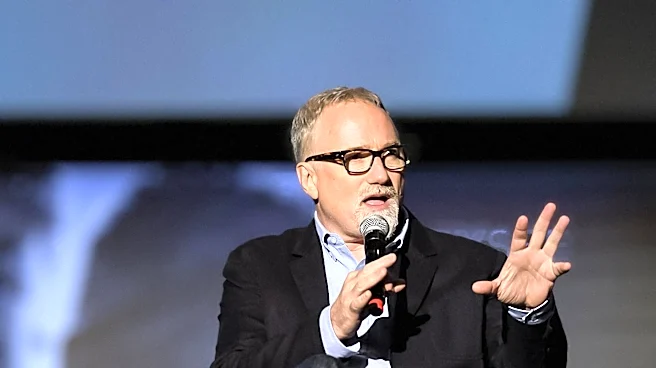
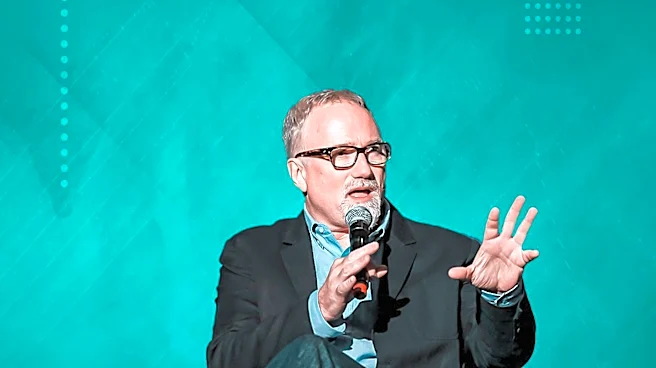
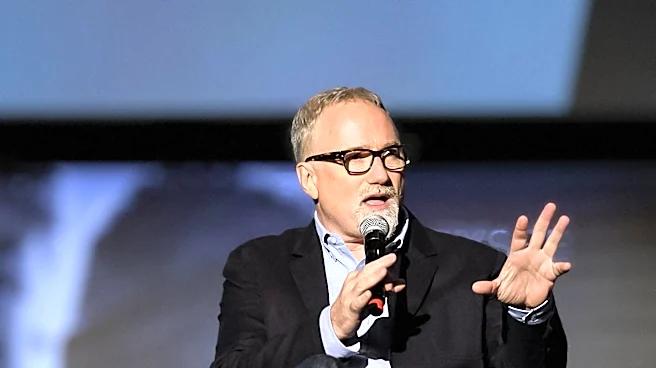
David Fincher, the acclaimed director known for films like 'Fight Club,' has indicated that 'The Further Mis-Adventures of Cliff Booth' could be his final movie. Fincher, who is 64, expressed on 'The Big Picture' podcast that his priorities have shifted,
and he no longer possesses the same level of patience for the filmmaking process. He specifically cited frustrations with the standardization practices of Hollywood studios, which he believes hinder creative vision and make moviemaking unnecessarily wasteful. Fincher also voiced his disapproval of the long working hours common in the industry, stating a preference for not working more than 10 hours a day. Despite these concerns, he defended the use of AI in his latest film, arguing that technology can enhance human work and streamline production.
Why It's Important?
Fincher's potential retirement and his criticisms of Hollywood studio operations highlight significant challenges within the film industry. His comments about standardization and wastefulness resonate with ongoing debates about creative control versus commercial pressures in major studios. If influential directors like Fincher opt out due to these issues, it could signal a broader trend of experienced filmmakers seeking alternative production models or leaving the industry altogether. This could impact the quality and diversity of cinematic output, potentially leading to a more homogenized film landscape. His defense of AI in filmmaking also underscores a growing tension between technological advancement and traditional production methods, a debate that has implications for jobs, artistic integrity, and the future of visual storytelling.
What's Next?
The future of David Fincher's directorial career remains uncertain, as he has only stated that 'The Further Mis-Adventures of Cliff Booth' *could* be his last film, not definitively that it will be. His comments may prompt further discussion within Hollywood about studio practices, working conditions, and the integration of AI in filmmaking. Other directors and industry professionals might weigh in on his criticisms, potentially leading to calls for reform or a re-evaluation of current production models. The success and reception of 'The Further Mis-Adventures of Cliff Booth' could also influence his decision, as positive critical and commercial performance might offer a different perspective on his future involvement in the industry.
Beyond the Headlines
Fincher's contemplation of retirement extends beyond personal preference; it reflects a deeper philosophical conflict regarding the industrialization of art. His belief that "storytelling is an intimate thing" clashes with the assembly-line approach he perceives in modern Hollywood. This tension raises questions about whether the pursuit of efficiency and profit in large-scale productions inherently compromises artistic integrity. The debate over AI's role, which Fincher views as an enhancement to human work, further complicates this, suggesting a future where technology could either liberate or further mechanize the creative process. His stance challenges the industry to consider whether its current operational models are sustainable for fostering genuine artistic expression.