






What's Happening?
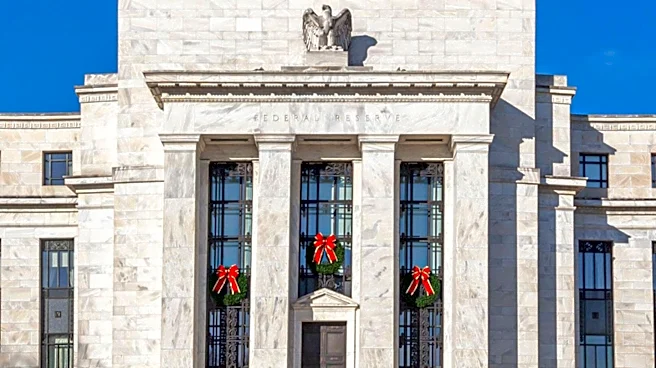
The Federal Reserve Banks of Dallas and New York have initiated a pilot survey to investigate lending trends within the U.S. private credit direct lending market. The survey, which opened on November 9 and will close on November 18, invites eligible firms
to participate. This initiative aims to gather insights into the availability and provision of credit, the evolution of lending standards in private credit markets, and the broader implications for the U.S. economy. The growing influence of nonbank financial institutions (NBFIs) in U.S. financial markets is a significant trend that has implications for both monetary policy and financial stability. The survey questionnaire is publicly available, and aggregate findings are expected to be published in the first quarter of 2027. Participation in the survey is voluntary, and the findings will not be used for supervisory purposes.
Why It's Important?
This pilot survey is crucial because the private credit market has experienced substantial growth, yet there is limited transparency regarding new lending activities. By collecting data on this sector, the Federal Reserve aims to gain a clearer understanding of its dynamics and potential impacts on the U.S. economy. The increasing role of nonbank financial institutions in providing credit means that traditional monetary policy tools might have different effects than in a banking-dominated landscape. Understanding the availability and standards of private credit is essential for assessing overall financial stability and the effectiveness of monetary policy. The insights derived from this survey could inform future regulatory approaches and help policymakers better manage economic risks, ensuring a more stable financial system. This initiative underscores the Fed's commitment to adapting its oversight to evolving financial market structures.
What's Next?
The survey will conclude on November 18, after which the Federal Reserve Banks of Dallas and New York will analyze the collected data. The aggregate findings from this pilot survey are scheduled for publication in the first quarter of 2027. These findings are expected to provide valuable insights into the private credit market, which could influence future discussions on monetary policy and financial regulation. Depending on the results, the Federal Reserve might consider expanding the survey or implementing new data collection methods to continuously monitor the private credit sector. Stakeholders, including financial institutions, policymakers, and economists, will be keenly awaiting the published report to understand the evolving landscape of U.S. private credit and its potential systemic implications.
Beyond the Headlines
The increasing prominence of the private credit market and nonbank financial institutions presents a complex challenge for traditional financial oversight. Unlike regulated banks, many private credit firms operate with less transparency, making it difficult for regulators to assess systemic risks. This survey represents a proactive step by the Federal Reserve to bridge this information gap. The insights gained could highlight areas where new regulatory frameworks or policy adjustments are needed to maintain financial stability. Furthermore, the growth of private credit reflects a broader shift in capital allocation, potentially altering the transmission mechanisms of monetary policy. Understanding these shifts is vital for ensuring that the Fed's actions effectively influence the real economy and mitigate potential vulnerabilities arising from less regulated segments of the financial system.