

What's Happening?
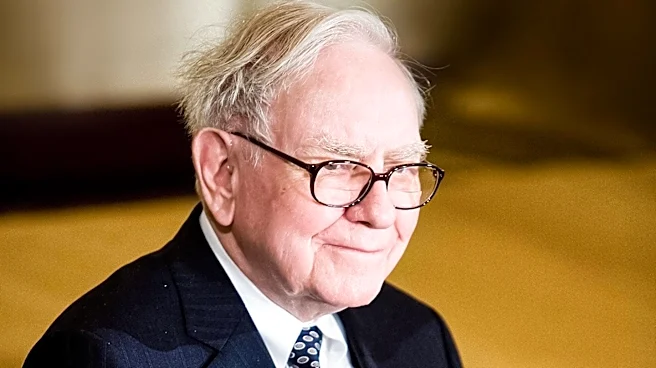
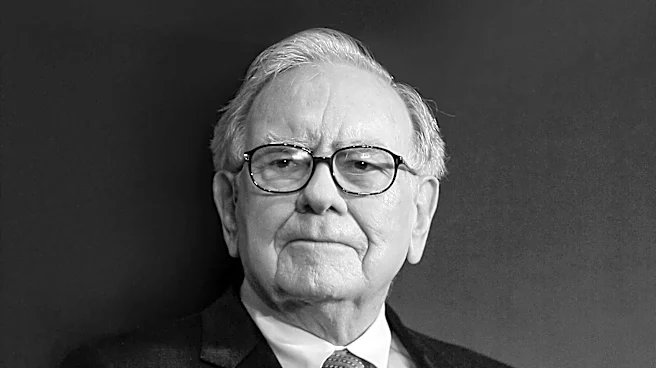
Berkshire Hathaway, operating under the same investing principles despite Warren Buffett no longer running the company, has seen its stock rise by 16% over the past three months. This contrasts with a 11% decline in tech-focused ETFs during the same period,
suggesting a pivot by investors towards safer stocks. The company's portfolio remains largely centered on Apple, American Express, and Coca-Cola, which constitute nearly half of its holdings. However, under new CEO Greg Abel, Berkshire Hathaway has shown a minor shift towards tech investments, including Bending Spoons, an acquirer that might not have been a typical Buffett investment. This move indicates a slight diversification in investment strategy while maintaining a core focus on high-quality, value-oriented assets.
Why It's Important?
This shift in investor preference towards Berkshire Hathaway highlights a broader market trend where investors are seeking stability amidst volatility in the tech sector. Berkshire's performance suggests it is perceived as a safe-haven investment, offering a degree of security when other market segments are experiencing downturns. The company's continued focus on established, iconic brands provides a stable foundation, while the subtle inclusion of new tech investments under CEO Greg Abel could signal an evolving strategy to capture growth opportunities without deviating significantly from its value investing principles. This could influence other large investment firms to re-evaluate their portfolios, potentially leading to a broader reallocation of capital from high-growth tech stocks to more stable, value-oriented companies.
What's Next?
As market uncertainties persist, particularly within the tech sector, Berkshire Hathaway may continue to attract investors looking for stability. The company's performance will likely be closely watched as a barometer for investor sentiment regarding market safety. Future investment decisions under Greg Abel could further define Berkshire's strategic direction, potentially balancing traditional value investments with carefully selected growth opportunities in technology. This could lead to increased scrutiny of its minor tech holdings to see if they align with the company's long-term value creation goals. Investors will also be observing whether Berkshire's stock valuation, currently at 16 times earnings, remains attractive compared to other safe-haven options, especially given its lack of a dividend.
Beyond the Headlines
The divergence between Berkshire Hathaway's performance and the tech sector's recent struggles points to a potential re-evaluation of investment philosophies in the broader market. It underscores the enduring appeal of value investing and established companies during periods of economic uncertainty, contrasting with the often-volatile nature of high-growth tech stocks. This trend could lead to a broader discussion about risk management and portfolio diversification strategies among institutional and individual investors. The slight foray into tech under new leadership also raises questions about the evolution of Berkshire's investment identity and whether it will gradually adapt to incorporate more modern growth sectors while retaining its core principles, potentially influencing how other traditional investment firms approach innovation.