





What's Happening?
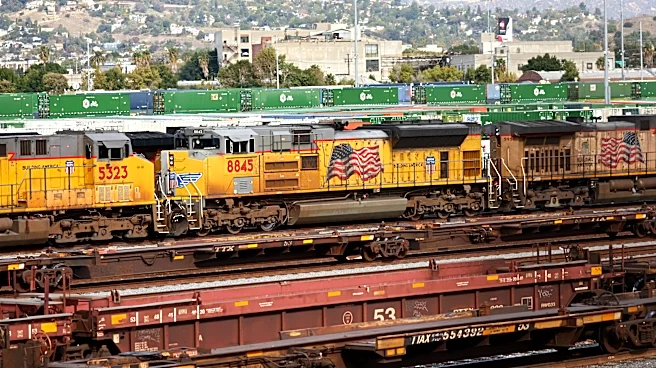
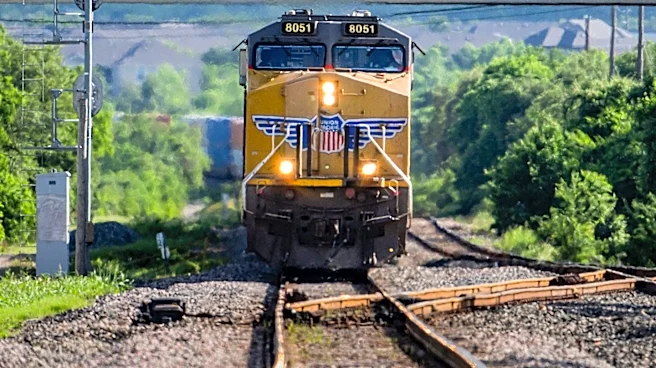
Union Pacific has announced its 20th consecutive year of annual dividend increases, raising its quarterly dividend from $1.38 to $1.42. This brings the annualized forward payout to $5.68 per share. Chief Financial Officer Jennifer Hamann highlighted that
free cash flow totaled $2.4 billion after reinvesting in their network and increasing the dividend. The company reported strong third-quarter results, with adjusted EPS of $3.53, surpassing the $3.47 consensus, and revenue rising 15.26% to $7.197 billion. The operating ratio stood at 58.8%, with pricing gains expected to outpace inflation. Chief Executive Jim Vena noted significant volume growth and core operating ratio improvement. The dividend payout uses approximately 43% of trailing diluted EPS, indicating strong coverage, and the company ended the quarter with $3.1 billion in cash and short-term investments.
Why It's Important?
Union Pacific's consistent dividend increases and robust financial performance underscore the stability and pricing power inherent in the U.S. freight rail industry. Railroads like Union Pacific own extensive networks that are virtually impossible to replicate, granting them a significant competitive advantage. This financial strength and predictability are crucial for income-focused investors, particularly retirees, who rely on steady dividend checks. The company's ability to generate substantial free cash flow, even after significant capital expenditures, demonstrates its operational efficiency and resilience against economic fluctuations. This performance also reflects the broader health of the U.S. economy, as freight volumes are often a key indicator of industrial activity and consumer demand. The ongoing strength of major rail carriers contributes to the reliability of supply chains across the nation.
What's Next?
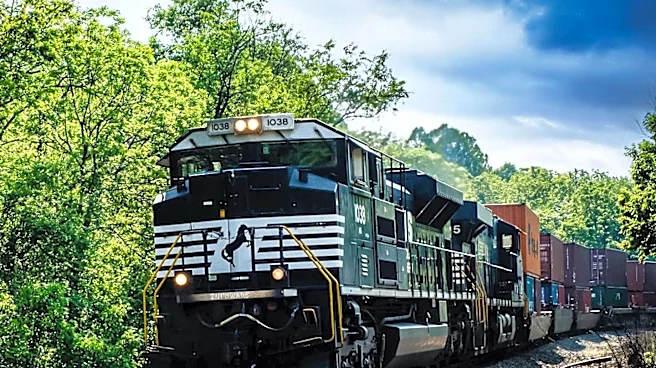
Union Pacific's management explicitly projects 'consistent annual dividend increases,' suggesting a continued commitment to shareholder returns. The company is currently involved in a pending acquisition of Norfolk Southern, which is under review by the Surface Transportation Board. This deal, if approved, is expected to close in the second half of 2027 and could significantly expand Union Pacific's transcontinental network. However, the acquisition also carries risks, including a potential credit rating downgrade due to increased debt. Chief Executive Jim Vena has indicated a willingness to withdraw from the deal if the terms become unfavorable to Union Pacific. Investors will be closely monitoring the Surface Transportation Board's decision and the integration process, as these factors will shape the company's future growth trajectory and financial structure.
Beyond the Headlines
The sustained profitability and dividend growth of Union Pacific highlight a critical aspect of the U.S. infrastructure: the enduring value and strategic importance of its rail network. In an era of increasing focus on supply chain resilience and efficiency, the established infrastructure of major railroads provides a foundational element for economic activity. The scarcity of these networks, built over more than a century, grants these companies significant pricing power, which translates into reliable cash flow and shareholder returns. However, this market dominance also raises questions about potential regulatory scrutiny, especially concerning large mergers like the proposed Union Pacific-Norfolk Southern combination. The balance between fostering competitive markets and allowing for the consolidation of essential infrastructure will remain a key consideration for policymakers and regulators, impacting not only the companies involved but also the broader U.S. economy and consumers.