





What's Happening?
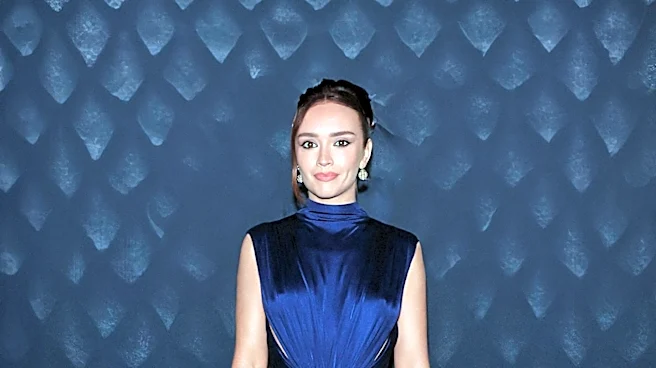
Olivia Cooke, who portrays Alicent Hightower in HBO’s 'House of the Dragon,' has publicly criticized the 'Game of Thrones' fandom for what she describes as 'ugliness' and misogyny in their discussions, particularly concerning her character's storyline.
Speaking with GQ, Cooke highlighted how certain fan interpretations and theories diverge significantly from the show's actual narrative. She specifically referenced the backlash from Season 3, which included controversial scenes involving Alicent and her son, Aemond Targaryen, such as a reluctant kiss and an intimate dream. Cooke emphasized that she tries to minimize the mental impact of this negativity, noting that the fandom also exhibits racism. She also defended the show's creative team, including director Clare Kilner, against suggestions that she was forced into uncomfortable situations, praising Kilner's kind and careful approach to directing. Cooke has taken steps to distance herself from online discourse, including a break from Instagram following the Season 3 premiere.
Why It's Important?
Cooke's comments shed light on the challenges actors face when fan communities engage in intense and often negative online discourse, particularly within large franchises like 'Game of Thrones.' Her remarks underscore a broader issue of online toxicity, misogyny, and racism that can permeate fandoms, impacting the mental well-being of individuals involved in creative productions. This situation highlights the fine line between legitimate criticism of creative choices and personal attacks or misinterpretations that can escalate into harmful online environments. For the entertainment industry, such incidents can influence how actors interact with their audience and potentially shape future engagement strategies. It also brings attention to the responsibility of fan communities to maintain respectful dialogue, even when discussing controversial plot points or character developments. The ongoing debate reflects a cultural tension between creative freedom and audience reception, with significant implications for public figures in the digital age.
What's Next?
While Olivia Cooke has indicated her return for the fourth and final season of 'House of the Dragon,' HBO has not yet confirmed a premiere date, though some projections suggest a mid-2028 release. The show is expected to conclude the Targaryen civil war, with Alicent remaining a central figure. Cooke's decision to distance herself from online discussions suggests a continued effort to protect her mental health from the more extreme elements of the fandom. This situation may prompt further discussions within the entertainment industry about managing fan engagement and addressing online harassment. It could also influence how future promotional campaigns for 'House of the Dragon' and similar shows navigate fan communities, potentially leading to more curated interactions or increased support for actors facing online backlash. The ongoing narrative of the show will likely continue to generate strong opinions, and how the production team and cast respond to these reactions will be closely watched.
Beyond the Headlines
The controversy surrounding Olivia Cooke's character and the 'Game of Thrones' fandom extends beyond typical fan critiques, touching upon deeper societal issues of misogyny and racism that are amplified in online spaces. The intensity of the backlash, particularly concerning scenes involving Alicent and Aemond, highlights how fictional narratives can trigger real-world prejudices and moral judgments within an audience. This phenomenon raises questions about the psychological impact of consuming and reacting to media, and how easily online anonymity can embolden harmful behaviors. The discussion also points to the evolving relationship between creators and consumers in the digital age, where the lines between constructive feedback and personal attacks often blur. Understanding these dynamics is crucial for fostering healthier online communities and for protecting individuals, especially women and minorities, from targeted harassment in the entertainment sphere and beyond. The incident serves as a case study for the broader implications of online culture on public discourse and individual well-being.