




What's Happening?
Zupt, a company specializing in offshore surveying, positioning, and sensor integration, has entered into a framework agreement with Mitang Brasil – Soluções Submarinas Ltda. This partnership aims to provide subsea survey, inertial metrology, remote metrology, and 3D
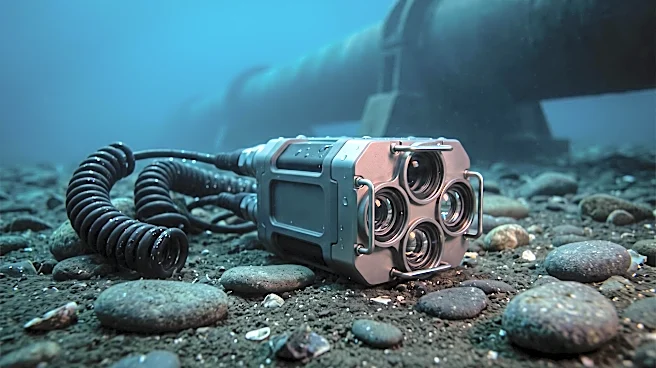
modeling services in Brazil. The agreement, which became effective on September 30, designates Mitang as Zupt’s local partner in the country. Together, the two companies will pursue work with operators and contractors in the offshore Brazilian market. As part of the collaboration, Zupt’s C-PINS inertial metrology system and its 3D Recon subsea imaging and modeling system will be stationed in Brazil. The C-PINS system is used for taking measurements necessary to fabricate jumpers and spools between subsea assets, offering both offshore and remote operation capabilities. The 3D Recon system creates detailed 3D models of subsea structures for contactless measurement, inspection, and engineering assessment, including applications like dimensional control and corrosion monitoring.
Why It's Important?
This strategic partnership between Zupt and Mitang has significant implications for the offshore energy sector in Brazil, a key region for deepwater exploration and production. By establishing a local presence for Zupt's advanced subsea metrology and imaging systems, the collaboration is expected to enhance the efficiency and cost-effectiveness of subsea operations. Keeping specialized equipment like C-PINS and 3D Recon in Brazil will reduce the need for repeated international shipments, thereby cutting down on logistics costs and lead times. This localized approach will also allow for greater flexibility in adjusting to changes in project scopes or schedules, which is critical in complex offshore environments. For U.S. companies involved in the Brazilian offshore market, this partnership could mean improved access to cutting-edge subsea measurement and inspection technologies, potentially leading to more precise installations, better asset integrity management, and ultimately, safer and more productive operations. It also highlights a trend towards localized support and technology deployment in the global energy industry.
What's Next?
With the framework agreement now in effect, Zupt and Mitang will jointly pursue new projects with offshore operators and contractors in Brazil. Mitang, based in Rio de Janeiro, will manage local commercial coordination and operational support, including logistics and customs, leveraging its expertise in offshore survey and positioning services. Zupt will maintain technical oversight of its procedures, reports, and deliverables, ensuring the quality and accuracy of the specialized services. The permanent presence of Zupt’s C-PINS and 3D Recon systems in Brazil is expected to streamline project execution and reduce operational hurdles. This localized infrastructure will likely lead to increased demand for their combined services, as offshore projects in Brazil continue to require precise subsea measurements and detailed structural assessments. The partnership is poised to become a key player in supporting the ongoing development and maintenance of subsea infrastructure in one of the world's most important offshore oil and gas regions.
Beyond the Headlines
The collaboration between Zupt and Mitang extends beyond mere service provision; it represents a strategic move to embed advanced technological capabilities directly within a critical energy market. This localization of high-tech subsea equipment and expertise can foster greater self-sufficiency and resilience within Brazil's offshore industry. By reducing reliance on international mobilization of specialized tools, the partnership mitigates risks associated with global supply chain disruptions and geopolitical factors. Furthermore, the continuous presence of these systems could facilitate knowledge transfer and skill development within the local workforce, potentially leading to the growth of a more sophisticated domestic subsea engineering sector. This model of localized technological deployment, driven by efficiency and responsiveness, could serve as a blueprint for other specialized industries operating in complex global environments, emphasizing the long-term benefits of in-country technical infrastructure over transient project-based deployments.