








What's Happening?
In 1980, Steve Bernard established Cape Cod Potato Chips in Hyannis, Massachusetts, with the goal of reintroducing kettle-cooked potato chips to a broader market. Starting with limited equipment in a small storefront, Bernard and his brother, Jude Bernard,
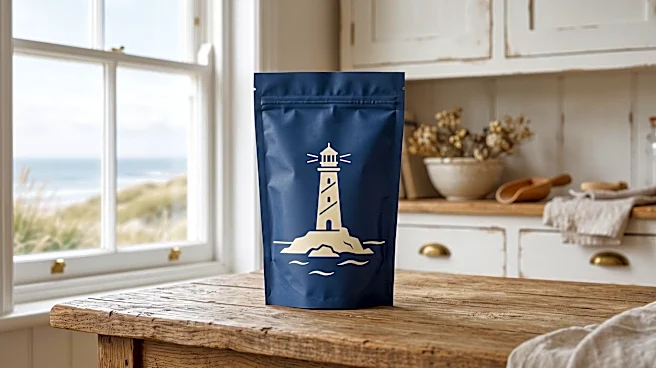
focused on producing chips in small batches, which resulted in a thicker, crunchier texture distinct from mass-produced varieties. The operation gained local popularity, with customers observing the production process through a window. The brand's distinctive packaging, featuring Nauset Lighthouse, connected the product to its coastal Massachusetts origins. After 19 years, Bernard sold Cape Cod Potato Chips to Lance Inc., a North Carolina-based snack food manufacturer, for an estimated $30 million. This acquisition followed an earlier period where Anheuser-Busch acquired the company in 1985, aiding in distribution expansion, before Bernard regained control in 1996.
Why It's Important?
The sale of Cape Cod Potato Chips to Lance Inc. for an estimated $30 million highlights the significant value and market potential of niche food products that resonate with consumer preferences for quality and authenticity. This transaction demonstrates how a regional specialty, built on a unique production method and strong brand identity, can achieve national recognition and substantial financial success. For Lance Inc., the acquisition likely provided an established, popular brand with a loyal customer base, expanding its portfolio in the competitive snack food market. For Steve Bernard, it marked the culmination of nearly two decades of entrepreneurial effort, transforming a small local business into a multimillion-dollar enterprise. The success of Cape Cod Potato Chips also underscores a broader trend in the food industry where consumers increasingly seek out products with perceived higher quality ingredients and traditional preparation methods.
What's Next?
Following the acquisition by Lance Inc., Cape Cod Potato Chips is expected to continue its national expansion, leveraging Lance Inc.'s broader distribution networks and marketing capabilities. The brand's signature kettle-cooked chips, known for their extra-crunchy texture and simple ingredients, will likely be introduced to new generations of customers across the country. The continued popularity of the brand, even decades after its founding, suggests a sustained demand for its product. Future developments may include further product line expansions or increased market penetration in regions where the brand currently has a smaller presence. The enduring appeal of the lighthouse packaging and the commitment to its original cooking methods are likely to remain central to the brand's strategy under new ownership.
Beyond the Headlines
The journey of Cape Cod Potato Chips from a small storefront to a multimillion-dollar acquisition offers a compelling narrative about American entrepreneurship and the power of a well-executed brand vision. It illustrates how a focus on product quality and a unique selling proposition can enable a small business to compete with larger, more established players. The story also reflects a cultural shift towards valuing artisanal and 'old-fashioned' food products, even within a highly industrialized food system. The brand's success could inspire other small-scale food producers to pursue similar growth trajectories, demonstrating that authenticity and a strong connection to local heritage can be powerful market differentiators. Furthermore, the repeated changes in ownership, from Bernard to Anheuser-Busch, back to Bernard, and then to Lance Inc., highlight the dynamic nature of corporate acquisitions and the strategic importance of brand assets in the food industry.