






What's Happening?
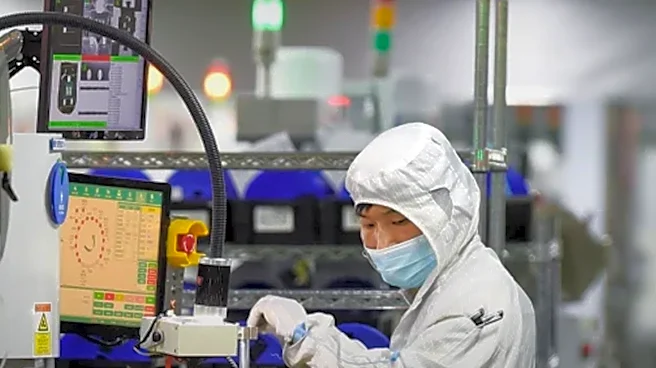
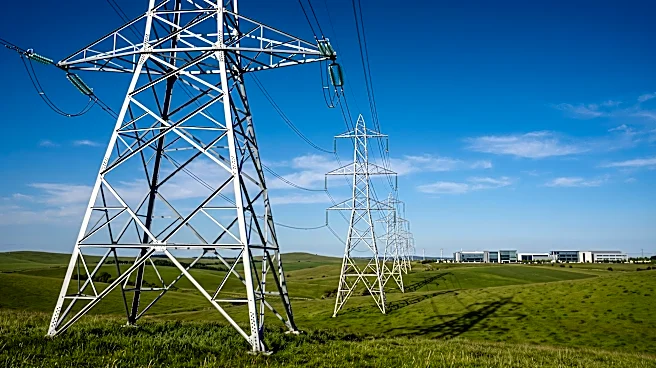
SK Hynix, a major memory chip manufacturer, is encountering significant challenges in South Korea due to the national power grid's inability to support the electricity demands of its new AI memory factories. The state utility, KEPCO, proposed that SK Hynix and Samsung
prepay for the necessary grid infrastructure buildout, a request that both companies have rejected. This refusal stems from the substantial cost, estimated to be equivalent to five years of SK Hynix's electricity expenses, which is typically recovered through rates over decades. South Korea projects that new semiconductor plants and data centers will require an additional electricity supply comparable to the output of twenty nuclear reactors, necessitating extensive new high-voltage transmission corridors, substations, and generation capacity. These infrastructure projects require years to permit and construct, posing a direct threat to the timely expansion of AI memory production.
Why It's Important?
This situation is critical for the U.S. technology sector and global AI development, as high-bandwidth memory (HBM) is a crucial component for AI systems, and demand is currently outpacing supply. Delays in SK Hynix's production due to power constraints in South Korea could exacerbate existing supply chain issues, leading to higher HBM prices and potentially slowing the advancement and deployment of AI technologies worldwide. The U.S. market, heavily reliant on these components, would experience direct impacts on its tech companies and their ability to innovate. The issue also highlights a broader vulnerability in the global technology supply chain, where critical manufacturing capabilities are concentrated in regions facing infrastructure limitations. This could prompt U.S. companies and policymakers to further prioritize domestic semiconductor manufacturing and diversify sourcing to mitigate future risks.
What's Next?
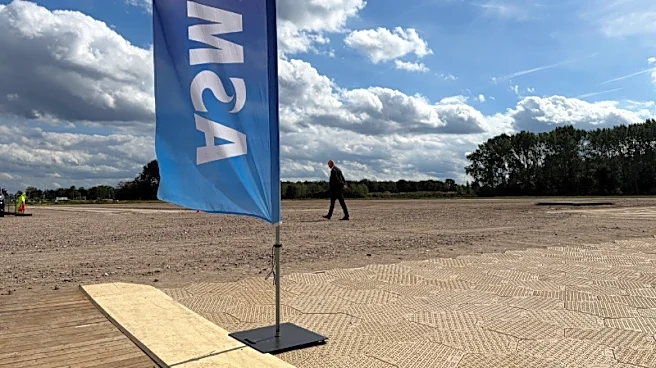
Three potential resolutions are identified for this power grid dilemma. The first path involves the Korean government and KEPCO absorbing most of the infrastructure costs through public funding and rate-based recovery, with manufacturers paying a smaller share based on consumption, which would keep AI memory supply on schedule. The second, and most likely, path is a negotiated middle-ground cost-sharing arrangement where manufacturers contribute significantly but avoid the full upfront payment. This approach is politically more feasible. The third path, if no agreement is reached, would result in delayed fab construction, further tightening HBM supply, and maintaining elevated pricing for existing production. SK Hynix is already diversifying its geographical footprint, having broken ground on an HBM production base in Indiana, signaling a strategic move to mitigate political and grid-capacity risks in South Korea and ensure future supply stability.
Beyond the Headlines
The power grid challenge in South Korea for AI memory production reveals a deeper, less obvious implication: the physical infrastructure limitations that underpin the digital revolution. While the focus is often on chip design and manufacturing, the sheer energy demands of advanced computing, particularly AI, are creating unprecedented strain on existing national infrastructures. This situation underscores the critical interdependence between technological advancement and foundational utilities like electricity. It raises ethical questions about who bears the cost of infrastructure upgrades necessary for private industry growth, especially when that growth is deemed strategically important for national economies. Furthermore, the move by SK Hynix to establish production in Indiana highlights a global shift towards diversifying critical supply chains, driven not just by geopolitical considerations but also by practical constraints like energy availability, potentially reshaping the geography of high-tech manufacturing and fostering new economic hubs.