






What's Happening?
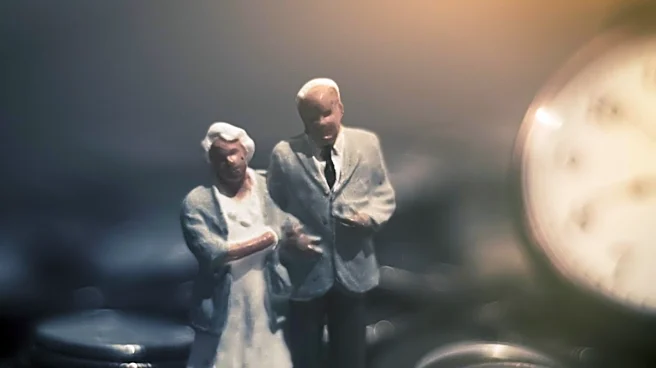
Henry Wadsworth Longfellow's 1875 poem, 'Morituri Salutamus,' specifically lines 262ff, offers a contemplative perspective on old age. The poem describes old age not as a period of growth or strength, but as a time of waning, akin to the 'dusk of evening'
or the 'ashes and of embers spent.' It emphasizes weakness over strength and the surcease of desire, rather than its presence. While acknowledging that 'some living sparks we still discern,' these are depicted as 'enough to warm, but not enough to burn.' The poem was originally written for the 50th anniversary of the Bowdoin College class of 1825, providing a reflective piece for individuals entering the later stages of life.
Why It's Important?
Longfellow's 'Morituri Salutamus' holds cultural significance as a classic piece of American literature that articulates a universal human experience: aging. Its enduring presence in literary discourse highlights the timeless nature of themes such as decline, mortality, and the passage of time. For readers, the poem offers a poignant and realistic portrayal of old age, contrasting with more romanticized views. In an era where discussions around aging, healthcare, and societal roles for the elderly are increasingly prominent, Longfellow's work provides a historical and poetic lens through which to understand these complex issues. It underscores the importance of acknowledging the natural progression of life and the inherent changes that come with it.
What's Next?
As a historical literary work, 'Morituri Salutamus' continues to be studied and appreciated in academic and literary circles. Its themes remain relevant for discussions on aging, human experience, and the role of poetry in reflecting societal values. The poem may continue to be referenced in contemporary works, educational curricula, and public discourse concerning the elderly. Its enduring message serves as a reminder of the cyclical nature of life and the inevitability of decline, prompting ongoing reflection on how individuals and societies perceive and prepare for old age. The poem's continued presence in anthologies and literary analyses ensures its message persists across generations.
Beyond the Headlines
The poem's exploration of old age as a period of 'waning' rather than 'crescent moon' challenges the modern emphasis on perpetual youth and vitality. In a society often driven by the pursuit of anti-aging solutions and the denial of decline, Longfellow's candid portrayal offers a counter-narrative. It invites a deeper philosophical contemplation of what it means to age gracefully, to accept the natural diminishment of physical and perhaps even emotional 'fire,' while still recognizing the presence of 'living sparks.' This perspective can foster a more nuanced understanding of aging, encouraging empathy and a re-evaluation of societal attitudes towards the elderly, moving beyond superficial ideals to embrace the wisdom and quiet dignity that can accompany later life.