



What's Happening?
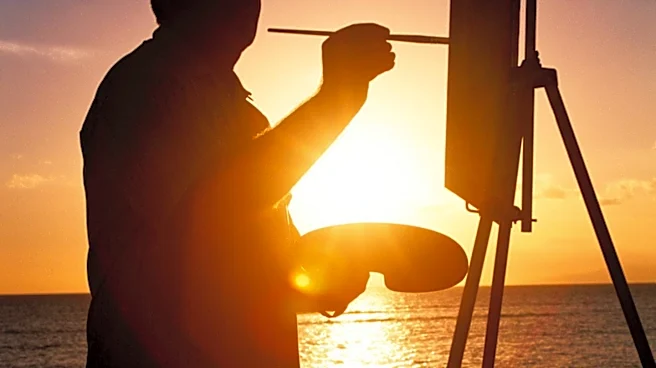
Kate Capshaw, known for her roles in 1984's 'Temple of Doom' and various 1990s films like 'Just Cause' and 'How to Make an American Quilt,' has retired from acting. After stepping away from the film industry in the early 2000s, Capshaw embarked on a successful
career as a painter. Her artwork has been exhibited in prominent institutions, including the Smithsonian National Portrait Gallery and the Obama Presidential Center in Chicago. Capshaw's acting career included working alongside Ke Huy Quan and Harrison Ford in 'Temple of Doom,' which was directed by her future husband, Steven Spielberg. Her transition highlights a shift from a public acting career to a private artistic pursuit.
Why It's Important?
Capshaw's career trajectory underscores a broader trend among some public figures who transition from high-profile entertainment careers to other fields, often in the arts or philanthropy. Her success as a painter, with exhibitions at prestigious venues like the Smithsonian and the Obama Presidential Center, demonstrates that talent and recognition can extend beyond an initial career path. This shift can inspire others to pursue new passions later in life and highlights the diverse talents of individuals within the entertainment industry. For the art world, it brings a new, recognized figure, potentially drawing more attention to contemporary art. For the public, it offers a different perspective on celebrity, moving beyond the glare of Hollywood into more personal and creative endeavors.
What's Next?
While Capshaw has fully embraced her painting career, future exhibitions and artistic projects are likely to continue. Her established presence in the art world, marked by her past exhibitions, suggests ongoing engagement with galleries and art institutions. There is no indication of a return to acting, as her focus appears firmly rooted in her artistic endeavors. Her work may continue to be featured in significant cultural institutions, further solidifying her reputation as a painter. The Obama Presidential Center and the Smithsonian National Portrait Gallery are high-profile venues, indicating a sustained level of recognition for her artistic contributions.
Beyond the Headlines
Capshaw's pivot from acting to painting reflects a personal journey of creative fulfillment that extends beyond the commercial demands of Hollywood. This transition can be seen as a commentary on the pressures and transient nature of the entertainment industry, where individuals may seek more enduring and personal forms of expression. Her success in a new field also challenges conventional notions of career paths for public figures, demonstrating that reinvention is possible and can lead to significant achievements in entirely different domains. It also highlights the value of art as a second career for those seeking a different kind of legacy.