






What's Happening?
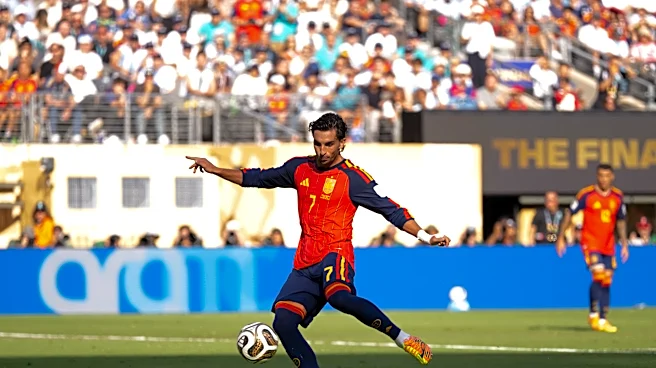
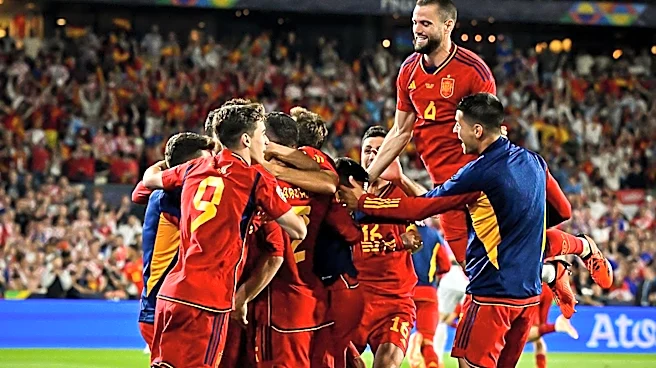
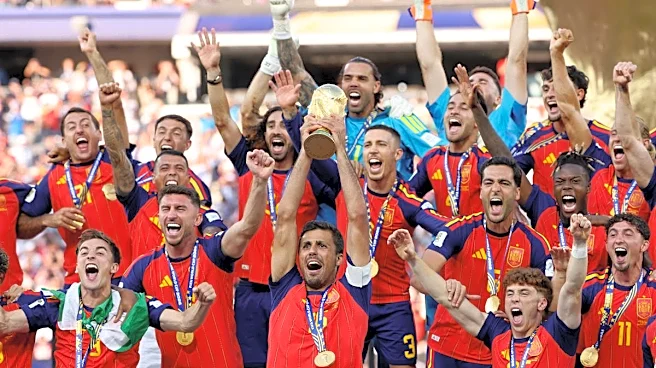
The 2026 FIFA World Cup has become a major ratings success in the United States, with coverage on Fox and Telemundo drawing nearly 65 million viewers for the final match between Spain and Argentina. This viewership surpasses that of any sports telecast
outside the Super Bowl since the 1994 Winter Olympics. The tournament's timing, coinciding with a lull in other major sports events, contributed to its success. The World Cup's ability to attract viewers who typically do not follow soccer highlights its broad appeal.
Why It's Important?
The World Cup's success in the U.S. signifies a growing interest in soccer, potentially influencing the sport's popularity and commercial opportunities in the country. The high viewership numbers demonstrate the event's ability to engage a diverse audience, which could lead to increased investment in soccer-related media rights and sponsorships. This trend may also encourage networks to pursue broadcasting rights for future international soccer events, further integrating the sport into the American sports landscape.
What's Next?
With the 2026 World Cup setting new viewership records, networks and streaming platforms are likely to compete aggressively for the rights to future tournaments, including the 2030 World Cup. The success of the event may also lead to increased interest in domestic soccer leagues, such as Major League Soccer, which could see a boost in ticket sales and viewership. Additionally, the positive reception of the World Cup may encourage more U.S. cities to host international soccer events, further promoting the sport's growth in the country.