







What's Happening?
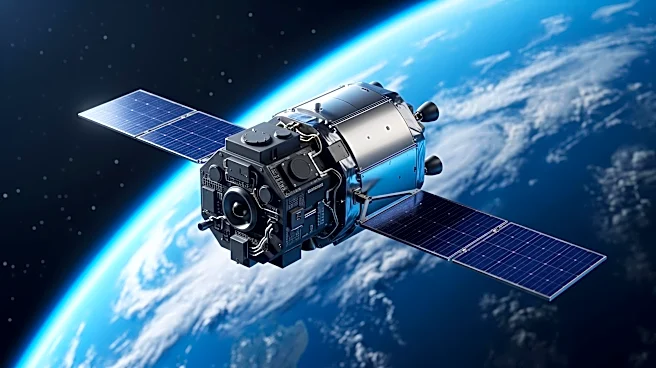
Loft Orbital is at the forefront of integrating Artificial Intelligence (AI) into the commercial space industry, specifically by implementing AI models directly onboard satellites. This technological advancement aims to process data in orbit, allowing
satellites to transmit only the most relevant information back to Earth, thereby increasing efficiency and speed. Pieter van Duijn, CTO, Systems at Loft Orbital, discussed these developments at Space Tech Expo Europe, highlighting the growing trust and application of AI within the commercial space sector. The company's approach focuses on optimizing data transmission by performing initial analysis and filtering in space, which is a significant shift from traditional methods where raw data is sent down for ground-based processing. This strategy is designed to address the increasing volume of data generated by satellites and the need for faster, more actionable insights.
Why It's Important?
The integration of AI directly into satellite operations by companies like Loft Orbital marks a critical evolution in the commercial space industry. This development has the potential to significantly reduce the bandwidth requirements for data transmission, lower operational costs, and accelerate the delivery of critical information. For various U.S. industries, including agriculture, environmental monitoring, defense, and disaster response, faster access to processed satellite data can lead to more timely and effective decision-making. It also positions the U.S. commercial space sector as a leader in advanced satellite technology, fostering innovation and potentially creating new economic opportunities. Furthermore, by enhancing the efficiency of satellite data, this technology can support a wider range of applications, from precision farming to advanced weather forecasting, ultimately benefiting numerous sectors and improving national capabilities in space-based intelligence.
What's Next?
The trend of integrating AI into satellite operations is expected to continue, with more companies likely to adopt similar strategies to enhance their space-based services. Future developments may include more sophisticated AI models capable of complex in-orbit analysis, autonomous decision-making by satellites, and further reductions in the need for ground-based data processing infrastructure. This could lead to a more decentralized and resilient space architecture. The commercial space industry will likely see increased investment in AI research and development, as well as collaborations between AI technology providers and satellite operators. Regulatory frameworks may also need to evolve to address the implications of autonomous AI systems operating in space, particularly concerning data privacy, security, and international cooperation.
Beyond the Headlines
The shift towards AI-powered satellites raises deeper implications beyond operational efficiency. Ethically, the deployment of autonomous AI systems in space necessitates careful consideration of control, accountability, and potential unintended consequences. The ability of satellites to make decisions or filter data independently could introduce new challenges in verifying data integrity and ensuring transparency. Legally, existing space law frameworks may need to be re-evaluated to accommodate the complexities of AI-driven operations, particularly regarding liability for errors or malfunctions. Culturally, this advancement signifies a growing reliance on intelligent automation in critical infrastructure, pushing the boundaries of human-machine collaboration in extreme environments. This technological trajectory could fundamentally reshape how humanity interacts with and utilizes space, moving towards a more intelligent and self-sufficient space-based ecosystem.