







What's Happening?
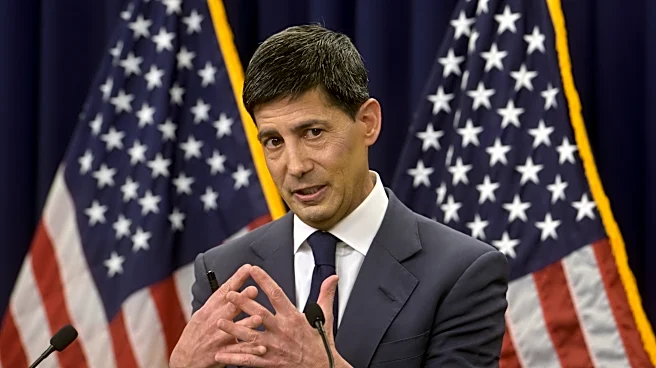
Dallas Fed President Lorie Logan delivered remarks at the 'Future of Market Liquidity and Functioning Workshop' held at the Federal Reserve Bank of New York. The panel, titled 'Market Liquidity and Leverage in a Digital Age,' addressed critical issues
in financial markets, including market liquidity, leverage, and the impact of technology. Logan emphasized the importance of market liquidity, which facilitates efficient capital allocation and credit flow, contributing to the U.S. economy's strength. She noted that during the 2020 pandemic, market liquidity issues highlighted vulnerabilities in the financial system. Leverage, or the ability to borrow against assets, was discussed as a factor that can enhance market liquidity but also amplify financial risks. Logan also highlighted the transformative role of technology in financial markets, citing both its potential benefits and risks. The panel included experts from both the public and private sectors, who discussed the adaptation of markets to changes such as broader central clearing and the potential use of blockchain technology.
Why It's Important?
The discussion on market liquidity and leverage is crucial as it addresses the stability and efficiency of financial markets, which are foundational to the U.S. economy. Market liquidity ensures that assets can be traded easily, supporting economic growth and stability. However, the 2020 pandemic exposed how quickly liquidity can evaporate, posing risks to the financial system. Leverage, while beneficial for enhancing liquidity, can lead to rapid asset sell-offs during downturns, exacerbating market instability. The integration of technology in financial markets offers opportunities for increased efficiency and reduced risks, but also introduces new challenges, such as cyber risks. Understanding these dynamics is vital for policymakers, financial institutions, and investors to navigate and mitigate potential risks, ensuring the resilience of financial markets.
What's Next?
The panel highlighted ongoing efforts to strengthen financial markets, including the Securities and Exchange Commission's mandate for central clearing of Treasury transactions. This move aims to enhance risk management and transparency. The Federal Reserve is also considering central clearing for its operations to further support market strength. Additionally, the potential use of blockchain technology to integrate market segments and improve collateral flow is being explored. These developments indicate a continued focus on enhancing market infrastructure and resilience. Stakeholders, including regulators and market participants, are expected to engage in ongoing dialogue to address emerging challenges and leverage technological advancements effectively.
Beyond the Headlines
The discussion underscores the evolving nature of financial markets in the digital age, where technology plays a pivotal role. The integration of digital tools not only offers efficiency gains but also necessitates robust risk management frameworks to prevent incidents like the 2012 Knight Capital collapse. The dialogue between market participants and regulators is crucial for adapting to technological changes and ensuring market stability. This ongoing collaboration is likely to shape the future of financial markets, influencing regulatory policies and market practices.