







What's Happening?
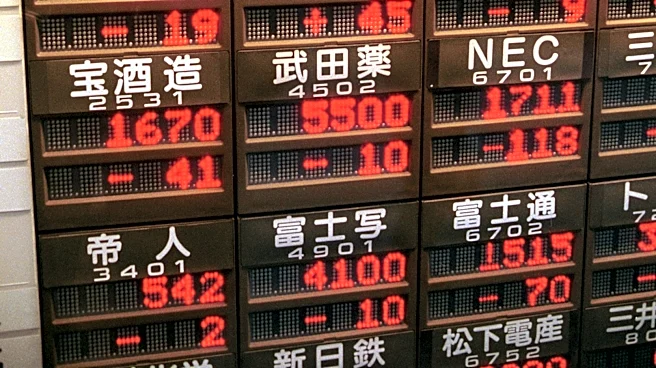
Japan is currently grappling with significant economic challenges, including a persistent sluggish economy, the highest debt-to-GDP ratio among advanced economies (approximately 200% as of 2026), inflation, and a weakened yen. These issues are further
compounded by low interest rates and a deepening demographic crisis, with over 30% of its population aged 65 or older, leading to concerns about labor shortages and decreased productivity. In response to these domestic hurdles and global supply shocks, Japan is focusing on leveraging the Comprehensive and Progressive Agreement for Trans-Pacific Partnership (CPTPP). Japan played a crucial role in preserving and negotiating the CPTPP after the U.S. withdrawal in 2017, demonstrating its commitment to a rules-based trading system. The nation's current strategy involves prioritizing CPTPP expansion, ensuring businesses fully utilize the agreement's benefits, and modernizing its provisions to adapt to evolving trade patterns.
Why It's Important?
Japan's efforts to maximize the CPTPP's economic value are critical for its domestic economy and its role in global trade. The agreement offers a platform for Japan to strengthen its position in international supply chains and markets, providing stability and diversification amidst global trade uncertainties. By expanding the CPTPP, Japan aims to enlarge its economic network, allowing Japanese firms to produce, source, export, and invest under common rules and standards, which is particularly beneficial for sectors like autos and semiconductors. Increased utilization of the CPTPP by Japanese businesses could lower costs and open new opportunities, while the agreement's investment protections and services access could attract foreign capital, crucial for Japan's low-growth economy. The modernization of CPTPP rules, especially concerning supply chain resilience and rules of origin, is vital for Japan's strategic sectors and energy security.
What's Next?
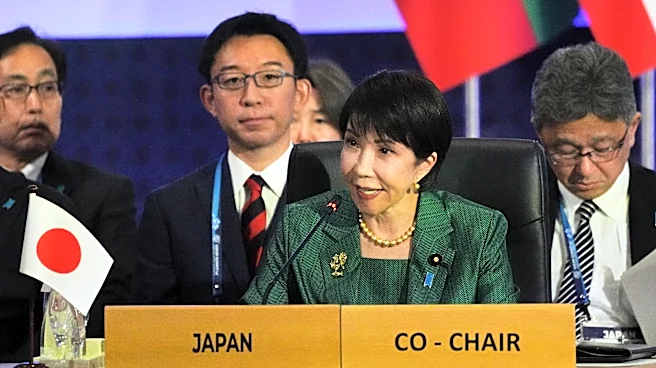
Japan plans to continue advocating for the expansion of the CPTPP, with ongoing accession talks with countries like Indonesia, the Philippines, and the UAE. Tokyo is also expected to propose hosting a permanent CPTPP secretariat. Domestically, efforts will focus on encouraging Japanese businesses, particularly SMEs, to increase their utilization of the agreement through targeted outreach and improved guidance on tariff preferences and rules of origin. Furthermore, Japan will play a leading role in modernizing the CPTPP, with ongoing negotiations to update rules in areas such as digital trade, services, customs, and business facilitation. Strengthening supply chain resilience is a key agenda item, with discussions on concrete mechanisms for cooperation during future disruptions, including information sharing and customs coordination.
Beyond the Headlines
The strategic importance of the CPTPP for Japan extends beyond immediate economic gains. In an increasingly fragmented global trading environment, the CPTPP serves as a critical tool for Japan to maintain and enhance its economic competitiveness by operating within larger, predictable economic networks. The agreement's emphasis on high standards in areas like intellectual property and digital trade can help shape future global trade norms. Moreover, by fostering deeper integration with key economies, the CPTPP can bolster Japan's geopolitical influence and provide a multilateral framework for addressing emerging economic risks. The success of Japan's strategy with the CPTPP could also serve as a model for other nations seeking to navigate complex global trade dynamics and build more resilient economic partnerships.