





What's Happening?
John Stankey, CEO of AT&T, has voiced skepticism about Starlink's ability to quickly establish a competitive national mobile network in the United States. Stankey believes that new competitors typically enter the market late, after significant infrastructure
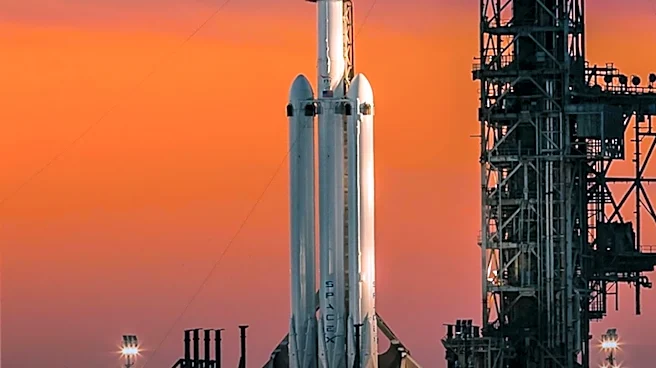
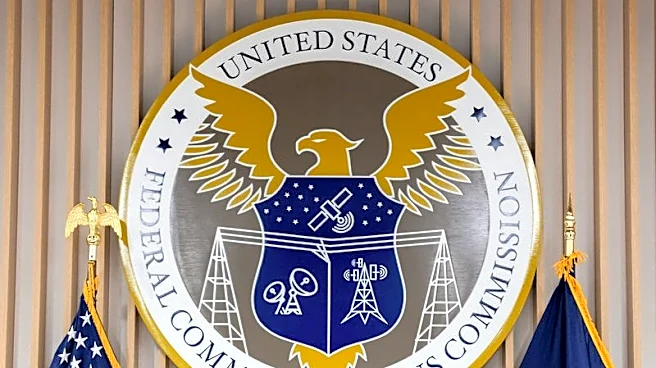
investments have already solidified the sector. This perspective comes as Starlink, a division of SpaceX, announced its intention to become a direct mobile operator in the U.S., aiming to capture a portion of the approximately $600 billion in annual revenue currently held by major carriers like AT&T, Verizon, and T-Mobile. Starlink's connectivity division reported $4.29 billion in revenue, a 66% increase year-over-year, with an operating margin of around 39%. The company has also acquired nearly $20 billion in radio spectrum from EchoStar with FCC approval, signaling its move from a supplementary service to a direct competitor. Despite Starlink's ambitious goals, which it projects to achieve between 2027 and 2028, established operators remain cautious about its immediate impact.
Why It's Important?
The potential entry of Starlink as a direct mobile operator could significantly disrupt the U.S. telecommunications market, currently dominated by AT&T, Verizon, and T-Mobile, which collectively control 98% of the market. While AT&T's CEO, John Stankey, downplays the immediate threat, the market has already reacted, with the stock prices of the three major carriers experiencing declines of 2% to over 4% following Starlink's announcement. This development highlights a shift in the competitive landscape, where a new entrant, backed by substantial capital and not solely reliant on mobile telephony for survival, challenges traditional business models. The move could lead to increased competition, potentially driving down prices and improving services for consumers, but also forcing established players to innovate and adapt their strategies. The acquisition of radio spectrum by Starlink further solidifies its intent to build out a terrestrial infrastructure, moving beyond its initial role of covering peripheral areas.
What's Next?
In response to Starlink's ambitions, AT&T, Verizon, and T-Mobile have formed a joint venture to pool spectrum and technical standards for direct-to-smartphone satellite connectivity. This collaboration aims to mitigate dependence on a single provider and allows them to compete on price and quality, letting customers choose. While T-Mobile maintains its existing ties with Starlink, AT&T and Verizon are also collaborating with AST SpaceMobile, another satellite connectivity company. Starlink itself aims to achieve its competitive national network goal between 2027 and 2028. The Federal Communications Commission (FCC) has already approved Starlink's acquisition of radio spectrum, removing a key regulatory hurdle. The coming years will likely see intensified competition and strategic maneuvers as these companies vie for market share in the evolving U.S. mobile telecommunications sector.
Beyond the Headlines
The emergence of Starlink as a direct competitor to established U.S. mobile carriers like AT&T raises broader questions about the future of telecommunications infrastructure and market dynamics. The traditional model, characterized by decades of investment in terrestrial infrastructure, is being challenged by satellite-based solutions. While AT&T's CEO, John Stankey, emphasizes the physical limitations of satellites in densely populated areas, Starlink's strategy of acquiring spectrum and building out terrestrial infrastructure suggests a hybrid approach that could overcome some of these limitations. This shift could lead to a more diversified and resilient telecommunications ecosystem, particularly in underserved rural areas. However, it also presents regulatory challenges regarding spectrum allocation and ensuring fair competition. The joint venture formed by the major carriers indicates a defensive strategy to maintain their market position, suggesting that the long-term impact could involve significant consolidation or new partnership models within the industry.