









What's Happening?
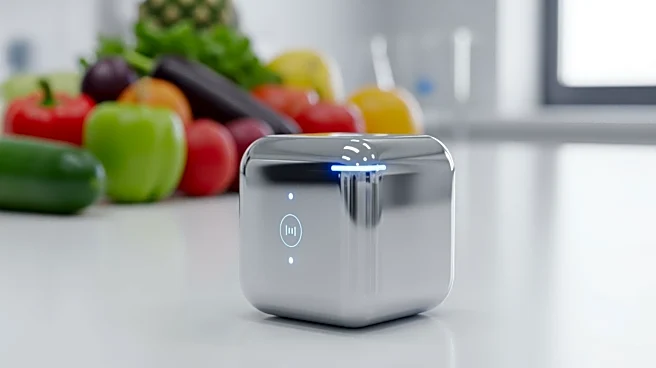
Researchers at the University of California, Berkeley, have developed an 'electronic nose' capable of detecting food allergens and spoilage with high accuracy. The device uses 16 gas sensors to convert chemical reactions from food into electronic signals.
In tests, it identified walnuts and cashews with 100% accuracy, hazelnuts with 91.96%, and peanuts with 80.65%. The device also demonstrated a 92.6% accuracy rate in detecting food spoilage. The technology could revolutionize food safety by providing a reliable method for identifying allergens and spoilage, potentially leading to applications in 'smart' refrigerators that alert users to food conditions.
Why It's Important?
The development of an electronic nose for detecting food allergens and spoilage could have significant implications for food safety and public health. With over 33 million Americans affected by food allergies, this technology offers a promising tool for preventing allergic reactions by accurately identifying allergens. Additionally, its ability to detect spoilage could reduce food waste and improve food quality. The device's potential integration into smart appliances could enhance consumer convenience and safety, making it a valuable innovation in the food industry.
What's Next?
The research team aims to expand the device's capabilities by adding more sensors to recognize a broader range of smells, including additional allergens and spoilage indicators. This expansion could enhance the device's applicability in various food safety contexts. The development of commercial applications, such as integration into smart kitchen appliances, is a potential next step. Continued research and testing will be necessary to refine the technology and ensure its effectiveness in real-world conditions, where foods are often mixed and present more complex detection challenges.