



What's Happening?
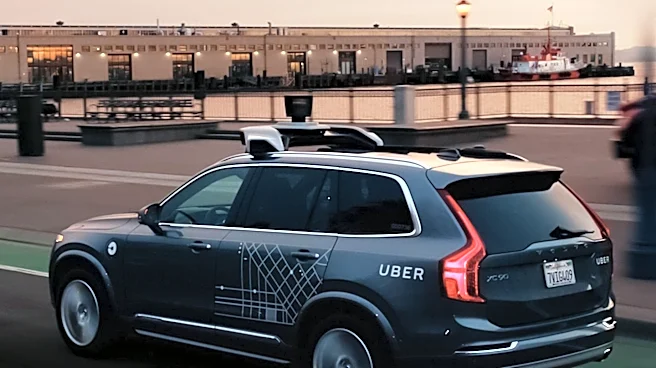
Motional, a company specializing in autonomous vehicles, is re-entering the robotaxi market with plans to launch fully driverless rides through Uber in Las Vegas in early December. This move follows a two-year overhaul of its autonomous driving technology.
Motional had previously paused a launch plan in 2023, determining that its technology, while safe, was too costly to scale profitably. The company has since adopted an AI-first approach, incorporating large driving models and leveraging its extensive experience in driverless technology. Motional's origins trace back to nuTonomy, an early pioneer in self-driving tech that initiated a robotaxi pilot in Singapore a decade ago. Hyundai Motor Group and Aptiv formed Motional as a joint venture in 2020, with Hyundai taking majority control in 2024 after acquiring a larger stake from Aptiv.
Why It's Important?
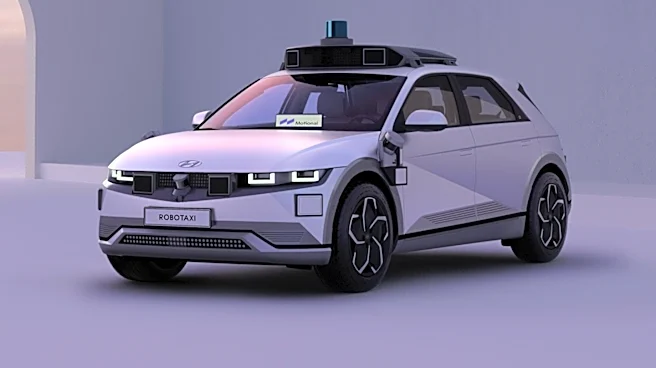
Motional's re-entry into the robotaxi race signifies a critical development in the autonomous vehicle industry, particularly concerning the challenge of achieving profitable scalability. The company's strategy of relying on deep partnerships, specifically with Hyundai for manufacturing and Uber for passenger connections, offers a different model compared to more vertically integrated rivals like Waymo and Zoox. This approach could potentially lower operational costs and accelerate deployment by integrating autonomous driving hardware directly into Hyundai's Ioniq 5 robotaxis during assembly. Furthermore, sharing data with Hyundai's assisted-driving software division, 42dot, aims to enhance Motional's AI models, potentially giving it a competitive edge in developing more efficient and reliable self-driving technology. The success of this model could influence future strategies for other companies in the burgeoning robotaxi market.
What's Next?
Motional is set to launch its fully driverless rides in Las Vegas through Uber in early December. Initially, the company plans to maintain a small fleet as it awaits the development of a next-generation platform featuring more cost-effective sensors and computing hardware. Motional CEO Laura Major has indicated that while the current technology is safe, the focus remains on achieving economic scalability, a challenge that no company in the industry has fully overcome. Las Vegas is emerging as a key battleground for robotaxi services, with Zoox and Waymo already operating driverless services, and Tesla also preparing for its own launch. Motional and Zoox are anticipated to be the first two driverless vehicle providers available through Uber in the same U.S. city, intensifying competition and potentially accelerating technological advancements in the sector.
Beyond the Headlines
Motional's strategic shift towards an AI-first approach and its reliance on strong partnerships highlight a broader industry trend: the recognition that technological prowess alone is insufficient for widespread adoption of autonomous vehicles. The emphasis on economic scalability and integrated manufacturing with Hyundai suggests a move towards more practical and cost-efficient deployment models. This collaborative ecosystem, where specialized companies focus on their core competencies (Motional on AI, Hyundai on manufacturing, Uber on ride-hailing), could redefine how autonomous vehicle services are brought to market. The ethical and legal implications of fully driverless vehicles, particularly concerning safety and liability, will continue to be a significant area of focus as these services expand. The competition in Las Vegas will also serve as a real-world testbed for different operational strategies and technological approaches, providing valuable insights into the future of urban mobility.