
What's Happening?
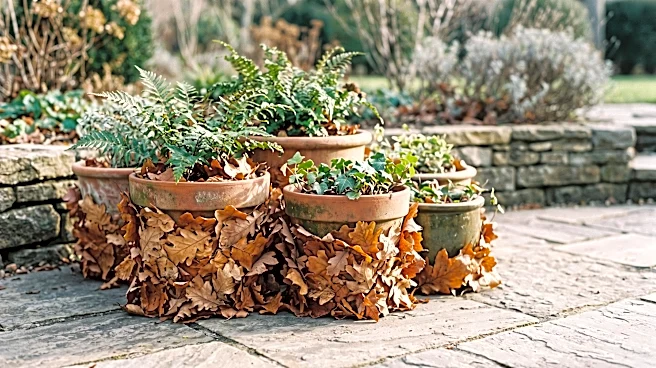
A practical and inexpensive method for protecting potted plants from winter frost involves using fallen leaves. Instead of the traditional advice of moving pots indoors or wrapping them, gardeners can
pack dry leaves around the sides of containers. This technique is distinct from simply mulching the top of the soil, as it specifically insulates the pot walls, where roots are most vulnerable to cold air. The leaves create air pockets that slow down heat loss and prevent rapid temperature fluctuations, which can damage roots through repeated freezing and thawing. This method is particularly effective for plants that are hardy in a given zone but are susceptible to winter damage when their roots are exposed in containers. Gardeners can either create insulating bags of leaves to place around clustered pots or construct a wire cage around a single large pot and fill the gap with leaves.
Why It's Important?
This leaf-based insulation method offers a significant benefit to U.S. gardeners, especially those in regions with fluctuating winter temperatures. It provides a cost-effective and environmentally friendly alternative to commercial insulation products or the labor-intensive process of moving numerous heavy pots indoors. By utilizing readily available fallen leaves, gardeners can reduce waste and promote sustainable practices. The protection offered to plant roots helps prevent winter kill, saving gardeners the expense and effort of replacing damaged plants. This is particularly important for perennial plants, shrubs, and even some roses that, while hardy in the ground, become vulnerable in containers. The technique empowers gardeners to extend the life of their container plantings and maintain healthier landscapes throughout the colder months, contributing to both personal satisfaction and broader ecological benefits.
What's Next?
As winter approaches, gardeners can immediately begin collecting and utilizing fallen leaves for this purpose. Educational outreach from gardening organizations and local nurseries will likely continue to highlight such sustainable and practical winterizing tips. Further research might explore the optimal types of leaves or packing methods for maximum insulation, but the core principle of using air pockets for thermal buffering will remain. This method could also inspire more creative and integrated approaches to garden waste management, turning a seasonal chore into a valuable resource. The long-term impact will be a more resilient and resource-efficient approach to container gardening in diverse U.S. climates.
Beyond the Headlines
The simple act of using fallen leaves for frost protection carries deeper implications beyond immediate plant care. It underscores a growing appreciation for natural cycles and the inherent value of organic materials often discarded as waste. This practice encourages a mindful approach to gardening, fostering a connection to the local ecosystem and promoting self-sufficiency. Ethically, it aligns with principles of sustainability and resourcefulness, reducing reliance on manufactured products. Culturally, it revives traditional gardening wisdom, emphasizing observation and adaptation to local environmental conditions. This method serves as a tangible example of how small, everyday actions can contribute to larger environmental goals, promoting a more harmonious relationship between humans and nature in the U.S. gardening landscape.