







What's Happening?
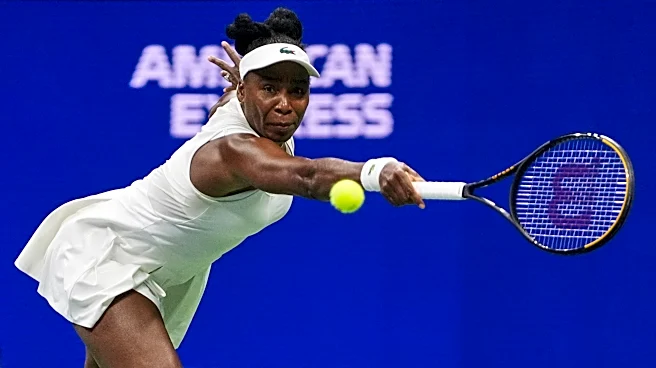
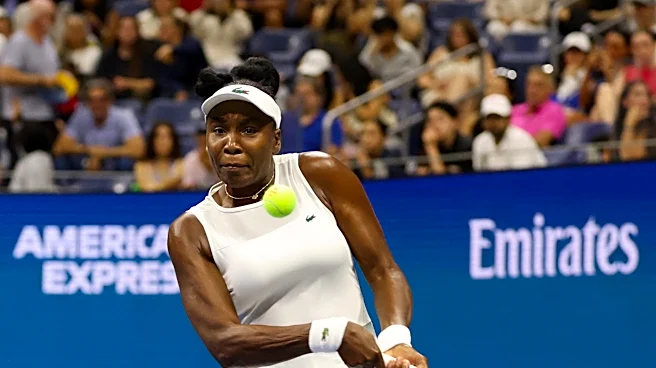
The extraordinary careers of tennis legends Venus and Serena Williams are being examined through the lens of scientific research, suggesting that younger siblings often benefit from a 'birth-order effect' in achieving elite athletic success. Dr. Joseph
Baker, a sports scientist at the University of Toronto, notes that elite athletes are statistically more likely to be later-born children. Dr. Frank Sulloway, a psychology research associate at the University of California, Berkeley, supports this with findings that the younger-sibling effect is a modest but reliable trend. For Serena Williams, the youngest of five sisters, her development was accelerated by competing against her older sister, Venus, on Compton's public courts. This dynamic forced Serena to enhance her skills to match Venus's more experienced and stronger play. Their father, Richard Williams, largely kept them out of junior tournaments, making their interdependent learning particularly potent. Serena herself has stated that she learned from Venus's mistakes, which helped her avoid similar pitfalls.
Why It's Important?
This research offers a compelling perspective on the development of athletic talent, moving beyond genetics to highlight the significant role of family dynamics and environment. The 'younger-sibling effect' suggests that the competitive crucible within a family, particularly when an older sibling sets a high standard, can be a powerful motivator and accelerator for the younger one's development. This phenomenon has implications for how parents and coaches approach youth sports, emphasizing the potential benefits of sibling rivalry and shared training environments. Understanding this dynamic can inform strategies for nurturing talent, recognizing that the presence of an older, more accomplished sibling can provide a unique learning and competitive advantage. It also sheds light on the psychological aspects of competition, where younger siblings may be driven to carve out their own niche and take strategic risks to surpass their predecessors, as observed in various sports beyond tennis.
What's Next?
The insights from this research could influence future approaches to athlete development and family involvement in sports. Parents and coaches might increasingly consider the dynamics between siblings when designing training programs or fostering competitive environments. Further studies could explore the specific mechanisms through which the younger-sibling effect operates, such as the psychological benefits of having a built-in role model or competitor, or the practical advantages of learning from an older sibling's experiences. This understanding could lead to more tailored and effective strategies for identifying and nurturing athletic talent from a young age. Additionally, the ongoing careers of other prominent sibling athletes will continue to provide real-world examples to test and refine these scientific theories, potentially leading to a deeper appreciation of the complex interplay between nature and nurture in elite sports.
Beyond the Headlines
The 'younger-sibling effect' touches upon broader themes of human development and social learning. It suggests that the family unit acts as a primary training ground, where individuals learn not only through direct instruction but also through observation, imitation, and competition with those closest to them. This concept extends beyond sports, potentially influencing academic achievement, career paths, and personal development. The research also highlights the importance of a supportive familial relationship, as hostility can lead to negative outcomes like burnout or a complete withdrawal from the competitive arena. The Williams sisters' story, characterized by both intense competition and unwavering mutual support, exemplifies how a positive sibling dynamic can foster extraordinary success. This deeper implication underscores the profound and often underestimated impact of family relationships on individual achievement and resilience.