






What's Happening?
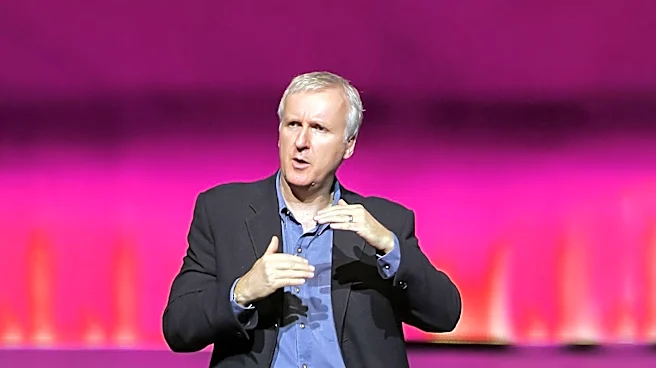
Jeff Bezos, Amazon founder, has offered advice to retirees navigating the current artificial intelligence (AI) market boom, which he characterizes as an industrial bubble. Speaking on Fox News, Bezos acknowledged the difficulty in distinguishing between
good and bad investments during such frenzies. He drew a parallel to the biotech boom of the 1990s, where investors lost money, but the period still yielded significant societal benefits, such as life-saving drugs. Bezos emphasized that even if a bubble bursts and speculators lose money, the underlying technological inventions often persist and continue to benefit society. He suggested that AI could lead to increased productivity, potentially allowing some individuals to work fewer days or enabling single-income households. This perspective highlights his view that market bubbles, while risky for investors, can still drive innovation and positive societal change. The current market shows significant reliance on AI, with the 10 largest U.S. stocks making up a record 41% of the S&P 500's market value, and nearly half of every dollar in the index linked to AI companies.
Why It's Important?
Bezos's insights are crucial for U.S. investors, particularly retirees, who are seeking to protect and grow their savings amidst the volatile AI market. His comparison to the 1990s biotech boom serves as a historical cautionary tale regarding investment risks, while also offering a long-term optimistic view on technological progress. For the broader U.S. economy, his comments underscore the dual nature of technological revolutions: they can create immense wealth and societal advancement but also carry speculative risks that can impact individual investors. The significant concentration of market value in AI-linked companies, as highlighted by the S&P 500 data, indicates a potential systemic risk if the AI bubble were to burst. Understanding this dynamic is vital for financial advisors, policymakers, and individual investors to make informed decisions, balancing the potential for innovation-driven growth with the need for prudent risk management in a rapidly evolving technological landscape.
What's Next?
As the AI market continues to evolve, investors will likely face ongoing challenges in discerning sustainable growth from speculative hype. Bezos's advice suggests a need for caution and a long-term perspective, focusing on the fundamental value and societal impact of AI technologies rather than short-term market fluctuations. Regulatory bodies may also increase scrutiny on AI-related investments to protect consumers from potential market excesses. Companies heavily invested in AI, such as Alphabet, which plans to spend between $195 billion and $205 billion for the full year on capital projects, will continue to drive innovation, but their financial performance will be closely watched as indicators of the sector's health. The market will likely see continued debate and analysis regarding whether the AI boom is sustainable or if it is heading towards a significant correction, similar to past technology bubbles.
Beyond the Headlines
The deeper implication of Bezos's perspective is the distinction between technological advancement and market speculation. While investors may experience losses in a bubble, the underlying innovations in AI are likely to persist and fundamentally reshape various U.S. industries, from healthcare to manufacturing and services. This suggests a long-term societal benefit even if short-term financial markets experience turbulence. The ethical and economic implications of AI-driven productivity gains, such as potential shifts in labor markets and the future of work, are also significant. If AI indeed allows for reduced workweeks or single-income households, it could lead to profound changes in lifestyle, consumption patterns, and social structures across the U.S. This broader impact extends beyond financial returns, touching on quality of life and societal organization, making the AI revolution a multifaceted phenomenon with far-reaching consequences.