



What's Happening?
African governments are facing significant financial strain due to increased costs for seaborne fossil fuel imports. A report by the Centre for Research on Energy and Clean Air (CREA) estimated that 32 out of 41 African countries paid an additional $21.9
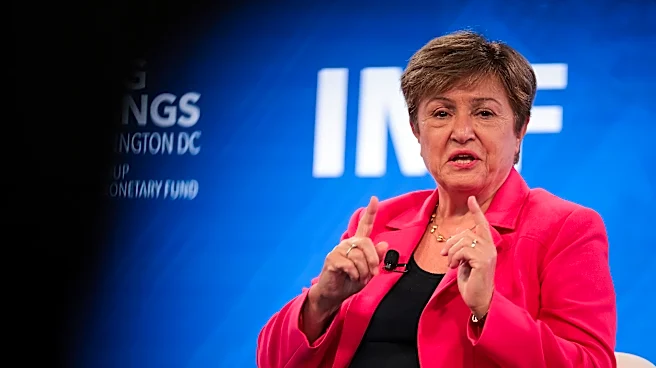
billion for these imports between March and August, compared to pre-war futures prices. Conversely, nine net exporters, including Nigeria, Angola, Libya, and Algeria, collectively gained an extra $21.6 billion. Nigeria alone saw a $7.5 billion gain. Countries like Egypt and South Africa were hit hardest, paying an extra $5.2 billion and $3.5 billion respectively. The World Bank noted that restricted fiscal space, high public debt, and persistent inflation have limited the ability of sub-Saharan African countries to implement long-term fuel subsidies or tax cuts. The International Monetary Fund (IMF) has urged governments to prioritize protecting vulnerable populations over subsidizing fuel prices, highlighting that only about one in seven fuel-relief measures across the region were targeted.
Why It's Important?
The escalating cost of fossil fuel imports has profound implications for the economic stability and social welfare of many African nations. The need to absorb these higher costs, either through direct subsidies or by allowing pump prices to rise, diverts crucial public funds that could otherwise be invested in development, infrastructure, or social programs. This situation exacerbates existing challenges such as high public debt and inflation, potentially leading to increased poverty and social unrest. The IMF's observation that most fuel-relief measures are untargeted suggests an inefficient use of resources, where subsidies often benefit wealthier segments of society more than the most vulnerable. This economic pressure could also hinder efforts towards energy transition and climate change mitigation, as governments may prioritize immediate energy security over long-term sustainable solutions.
What's Next?
African governments are likely to continue navigating the difficult balance between managing fuel costs and maintaining fiscal health. The IMF and other international bodies will likely continue to advocate for targeted support measures for vulnerable households rather than broad fuel subsidies. Countries that have implemented temporary tax cuts or levy suspensions may face decisions on whether to reinstate them, potentially leading to further price increases for consumers. The long-term strategy for many African nations will involve exploring ways to reduce their reliance on imported fossil fuels, potentially through increased domestic refining capacity, as seen in Nigeria, or by accelerating the transition to renewable energy sources. However, the immediate focus will remain on mitigating the economic impact of high global energy prices on their populations.
Beyond the Headlines
The disparity in impact between fossil fuel importers and exporters within Africa highlights a growing economic divergence on the continent. While some nations benefit from higher global prices, others face significant economic headwinds, potentially widening existing inequalities. This situation also underscores the vulnerability of many African economies to global commodity price fluctuations and geopolitical events. The debate over fuel subsidies versus targeted aid raises ethical questions about governmental responsibility to its citizens, particularly the most vulnerable, during economic crises. Furthermore, the long-term implications for climate action are significant; as governments grapple with immediate energy costs, investments in renewable energy and sustainable development may be deprioritized, potentially locking in fossil fuel dependence for longer.