









What's Happening?
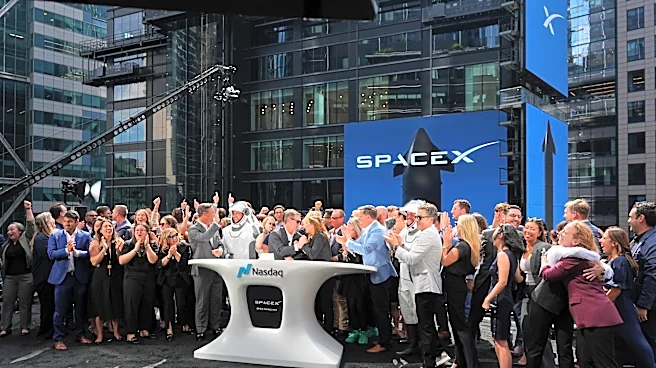
SpaceX, following its historic IPO, is experiencing significant stock market volatility. The company's valuation soared to nearly $3 trillion shortly after its Nasdaq debut but later fell to around $2.2 trillion as investors reacted to SpaceX's increased
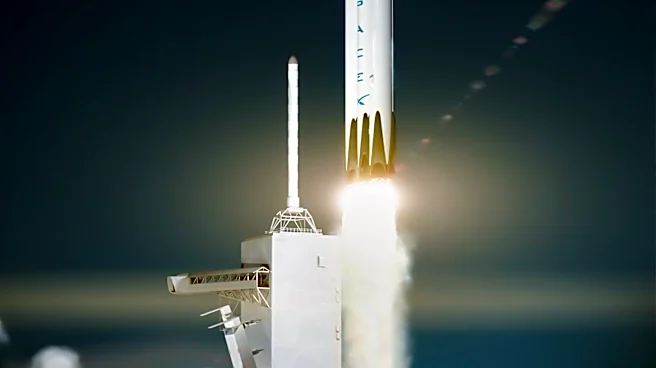
debt levels. The volatility is partly attributed to a large retail investor base, which tends to react emotionally to market changes. Despite these fluctuations, SpaceX continues to pursue ambitious plans, including the deployment of a massive satellite constellation using its Starship rocket. The company aims to launch 100,000 satellites, leveraging Starship's capacity to deliver payloads to orbit. This expansion is part of SpaceX's broader strategy to dominate the space industry, although it faces challenges such as development setbacks and competition from other heavy-lift vehicles.
Why It's Important?
The volatility in SpaceX's stock highlights the challenges and risks associated with investing in ambitious tech ventures. The company's plans to deploy a vast satellite network could revolutionize global communications and data services, impacting industries reliant on satellite technology. However, the financial instability poses risks to investors and could affect SpaceX's ability to secure future funding. The situation underscores the need for patience and long-term investment strategies in the space sector, where returns may not materialize until several years down the line. The outcome of SpaceX's endeavors could set a precedent for other companies in the space industry, influencing investment patterns and technological advancements.