





What's Happening?
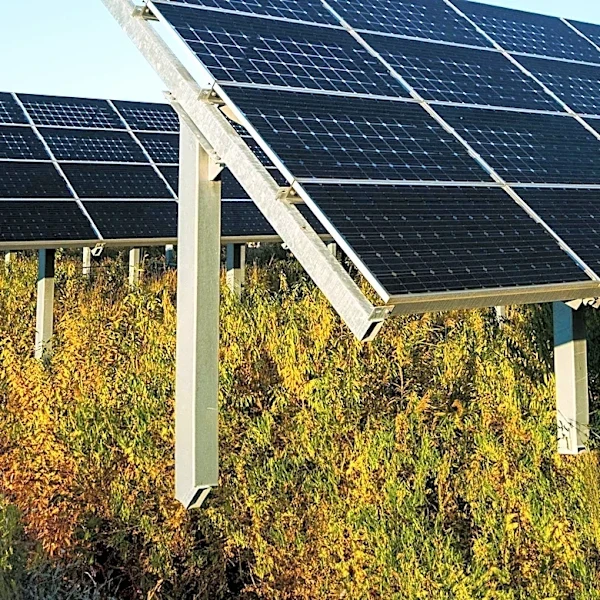
Disneyland Paris has completed a three-year project to install 82,000 solar panels over its visitor parking lot, creating a 36.1-megawatt power plant. This installation covers 11,200 parking spaces across more than 20 hectares, equivalent to approximately
49 acres. The project, built by Swiss energy group Axpo's subsidiary Urbasolar, was constructed in phases to allow the park's operations to continue uninterrupted. The annual output of 36 gigawatt-hours is comparable to the electricity consumption of a town with 17,400 people. However, none of this electricity directly powers the park's attractions; instead, the entire output is sold to the French electricity market. This commercial arrangement highlights a common practice in large-scale solar projects where generated power is sold to the grid rather than consumed on-site.
Why It's Important?
This project is significant as it demonstrates a model for large-scale renewable energy generation on existing infrastructure, specifically parking lots. While the electricity generated does not directly power Disneyland Paris, its contribution to the French grid helps meet renewable energy targets and reduces reliance on fossil fuels. The project also showcases the feasibility of constructing substantial solar installations without disrupting ongoing commercial operations, a key challenge for many potential sites. The economic model of selling power to the grid, rather than self-consumption, provides a revenue stream that helps finance the considerable investment in such infrastructure. This approach could influence similar developments in the U.S., where vast parking areas could be leveraged for solar energy production, contributing to national energy independence and environmental goals.
What's Next?
The Disneyland Paris solar canopy project will continue to operate for an estimated 30 years, contributing to the French electricity market. However, the French market is experiencing periods of negative wholesale electricity prices, particularly when solar output is at its peak. In response, France has implemented regulations allowing for the remote curtailment of photovoltaic installations above 5 MWp during these negative-price windows, effective December 1, 2026. This rule will extend to plants between 1 and 5 MW from March 1, 2027. As the Disney array is 36.1 MWp, it falls within the first tier, meaning its output could be curtailed during certain periods. This development highlights the evolving challenges and policy responses in integrating large-scale intermittent renewable energy sources into national grids.
Beyond the Headlines
The Disneyland Paris solar canopy project underscores a broader shift in how large commercial entities can contribute to renewable energy, even if indirectly. The distinction between generating 'enough' power for a facility and actually 'using' that power on-site is crucial for understanding the true impact of such projects. While the public perception might be that the park is powered by its own solar panels, the reality of selling to the grid points to a more complex economic and regulatory landscape. This model could become increasingly prevalent in the U.S., where incentives and grid infrastructure might favor selling power over direct consumption. Furthermore, the project's success in building a large-scale solar facility without operational shutdowns offers a blueprint for future urban and commercial solar developments, potentially transforming underutilized spaces like parking lots into significant energy assets.